
February 8, 1978

We crawled out of bed at 4:30. The sky was black and held few stars at that hour, though the eastern horizon hinted that dawn was kicking off the covers of darkness and would soon be up to light the day. We ate a hurried breakfast and by the time we finished stuffing our faces, daylight was breaking over the jungle.
Outside, we loaded all our gear into the swamp buggy, or into the boat. We were going to the “Pension” via two modes of transportation, one on land and one on the river. The boat would be used to shuttle supplies into us as needed and to rotate the married men, one at a time, back to camp or to the Pension. They would take weekly turns, one being left at the Hediondo, to keep the grass cut, to repair whatever broke, and to keep the women and children safe. Wally Pouncy would be the first to stay behind.
When all was ready, a rope was wrapped around the pully of the swamp tractor. It took two pulls, but the motor roared to life, noisy, and strong, like it was excited to be going on the adventure with us. The married men kissed their wives and said a last goodbye. I just mouthed a “goodbye” to everyone and with a limp wave of the hand we were off into the unknown .
We left base camp at 6:05. Alan Foster, Denny Decicio, and I were on the bogie. Paul Short and Matt Castagna would leave shortly after us in the boat. We planned to meet upstream where the road crossed the river. There, if they arrived first, the boat crew would wait and help us float the bogie and tailer across the river once we got there.
The loggers built “bridges” by filling the riverbed with horizontal logs, and then piling dirt onto those making a road on which their trucks and tractors could cross over to the other side. Rainy season and high waters, of course, had washed all the dirt away, leaving an uncrossable tangle of logs, so we would have to cut a road above or below the logs to drive the bogie down the bank, into the water, and float it across.
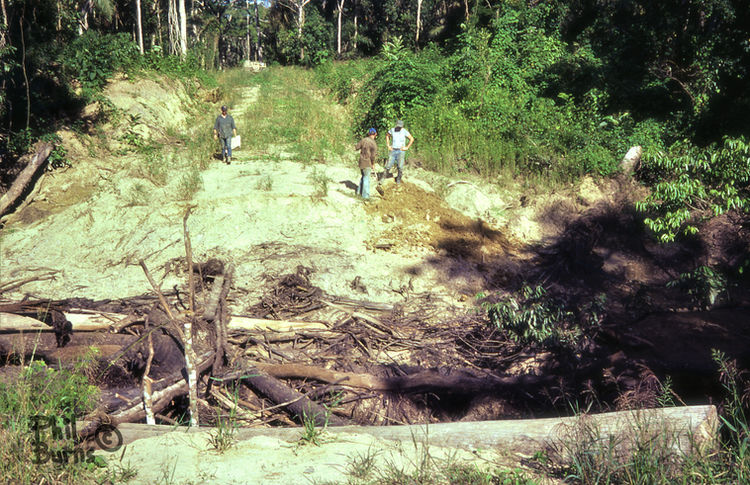
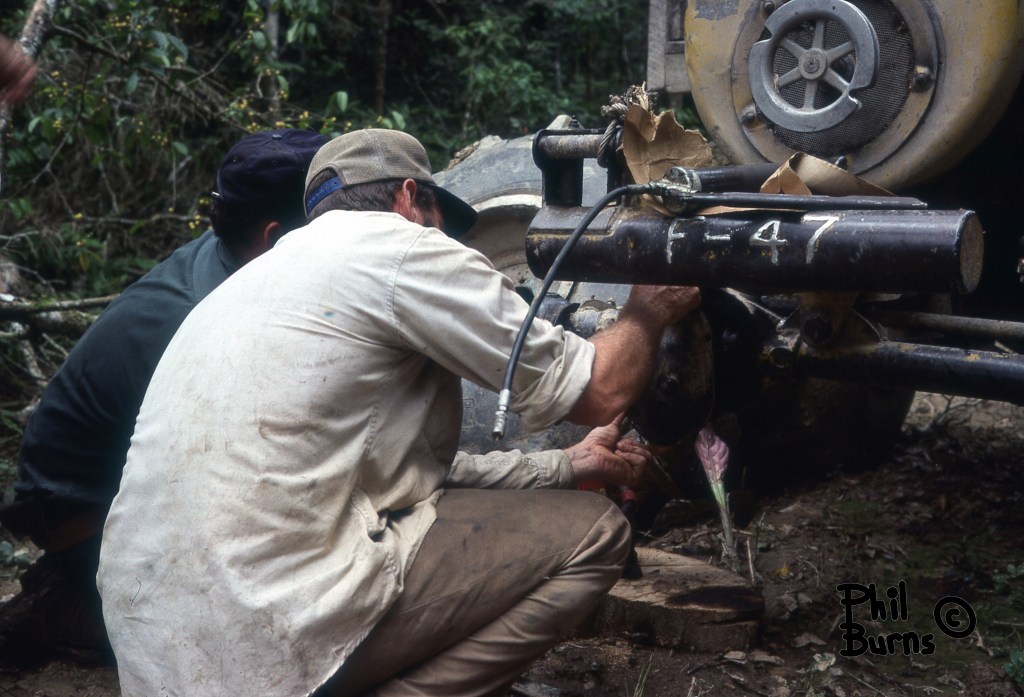
About 12 minutes walking distance from the crossing, we came to a couple trees, fallen across the road. I got the chain saw and started cutting. When finished with the fist one, Alan and Denny hooked the winch to it and pulled the tree out of the way. When they went to pull the next one, we heard a loud pop- something broke on the buggy! While Alan and I stated to pull it apart, Denny walked to the river to get the other guys.
It turned out the yoke that held the U-joint in place was broken. The joint was shot, too, the caps worn thin, and needles were missing. The U-joint had continued to spin and propel the bogie forwards or backwards, but over time, because of the sloppiness of the bad joint it had worn out the yoke until only a thin piece of metal was left. That is what made the loud pop and it was not something we could fix in the field.
We walked back to the river and took an hour boat ride back to camp. Using the radio, we explained our predicament to the mission supply buyer in Cochabama. In turn, he began to search part stores for the needed replacements. Nowhere, could they be found! We decided to have Brian Porterfield, our mission pilot, fly in to get the pieces. It was our hope that with the actual yoke and U-joint in hand, someone in the city could match them to the correct parts.
In the meantime, Denny would stay at camp and the rest of us would travel up in the boat, then Paul would return for Denny and more supplies from the bogie. So, from about 11:00 until 6 PM we sat in a boat. The Rio Hediondo was fine for travel, most of the time, but when we started up a tributary, it got bad!
There were no rapids or whitewater for us to get through, but these small riverbeds were deep and narrow, so the trees from one side often locked arms at the top with the trees growing on the other side. During rainy season, the riverbed filled with water and overflowed, and the trees growing lowest on the bank, now had the river current running though the upper branches. We had to get the boat through all that brush! Sometimes the boat driver could gun the outboard and crash the boat through the branches. At times, the boat became high centered on a large branch and we had to step out of the boat onto tree branches and pull the boat forwards. Sometimes we had to hack our way upstream with machetes, and the farther we went, the worse it got. The spots of clear water kept getting smaller and smaller. We didn’t make it to the sawmill as we had hoped.
Once, when crashing through the treetops, my sleeping bag was snagged by a branch and drug out of the boat. Everybody was trying to stay low to avoid branches overhead, so no one saw it go. When we hit open water again, Paul noted that the thing he had been sitting on was no longer there. We turned around and went to look for it. I had wrapped it in plastic and then put it in a cloth bag so was pretty sure it would float. It did, and I was a happy camper, again, when I it saw it caught in the trees, and floating, especially since it was not too far from where we turned around.
On the way up, we came across an Indian bridge; some sticks and logs thrown across the river with three uprights driven into the bottom mud to give it some stability. We also saw a footprint in the mud by a deserted lumber camp. The loggers had been gone for weeks, and usually they wear some sort of shoes or crude sandals on their feet, so there was a good possibility that the print was that of a Yuqui Indian. We hoped so! The Nomads were the reason we were entering the unknown. We knew the danger when we chose to come. We wanted to befriend this group and someday, soon, tell them that Jesus loved them.
Knowing we wouldn’t reach the sawmill; we made camp before it got dark. I strung my hammock and mosquito net between two trees. Then, I took a bath in the river, shaved without a mirror, brushed my teeth with river water, and pulled on the same dirty clothes that I had worn all day. Yuck! Laundry would have to wait until we reached the “pension.” Supper consisted of rice and whatever else we could find that was easy to fix.
By the time darkness engulfed us, most of us had crawled into our beds. I removed my dirty, damp clothes and hung them up on a branch with scant hope they would dry before morning, before getting into the mosquito net. Wearing them in the waking hours was bad enough, but I could not fathom sleeping in them! There were no ladies around, so modesty wasn’t much of a concern. Underwear would have to double as pajamas! My sleeping bag was nice and dry, but much too warm to crawl into, and I doubted even dawn would bring cover-up temperatures.
The thin “wall” of mosquito net was my only protection from the bugs and the Indians- this was their territory! My hammock and net felt securely tied and seemed to keep the bugs out. I knew it would not fare as well, nor would I, should a jungle Yuqui shoot an arrow into the net! Their arrows were seven or more feet long. However, at the time, I was more afraid that one wrong move in the night would dump me on the ground.
By flashlight, I wrote the day’s events into my journal. The other guys were soon quiet unless they were snoring! It was time to join them. I killed my light and thanked God for His protection in the trip so far and asked for strength and protection for the morrow.
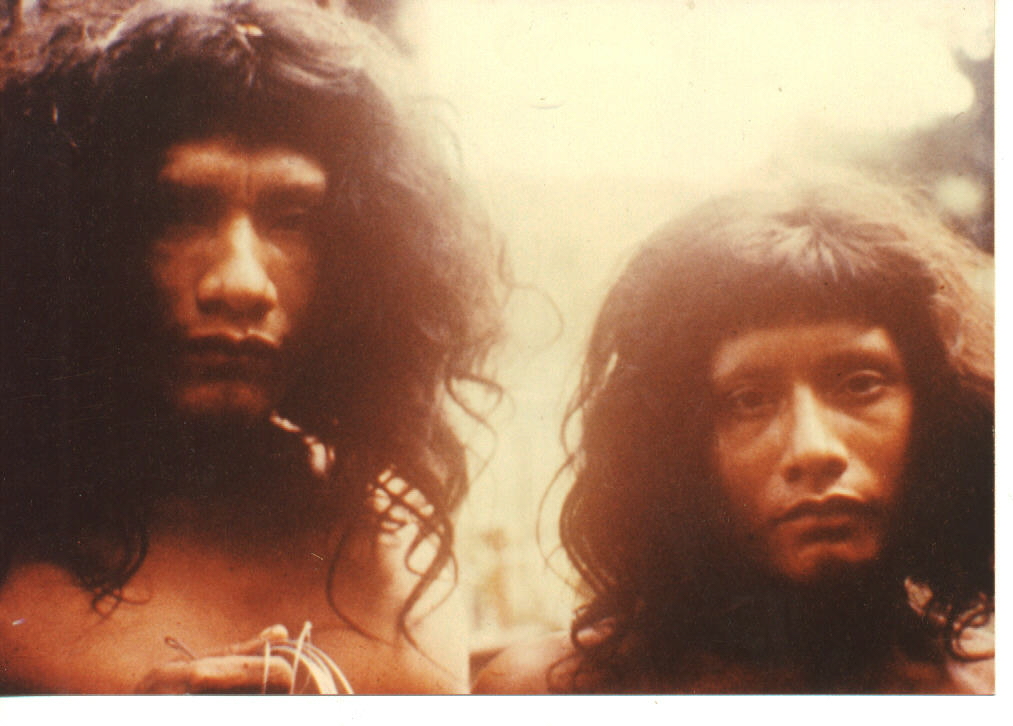
“Hope there isn’t a surprise attack tonight, Lord.” I prayed. Musing, I continued, “Maybe they’re afraid of the dark!” I had been told they were, and I was hoping it was true! “Lord, let this group of Yuqui be reached soon! Amen!”
This story was from the category Tales From Green Hell. If you would like to read more of my experiences in the jungles of Bolivia, please click on that link below.
More Writings by Phil
- Life Happens (31)
- Love Stories (4)
- Mission Related (1)
- Over-The-Hill In Europe (5)
- Stories of the Mbia (the People) (2)
- Tales From Green Hell 1978 -1979 (60)
- Theme Writing 1971 (2)
- This And That (26)
- Uncategorized (1)
 Writings By Phil
Leave a comment