
Feb 21, 1978
It was raining, again. The storm started before I got out of bed in the morning. When I looked at the sky from under our thatched roof, I saw its face was dark and sullen. It vacillated between steady weeping and heavy bawling, but for hours its tears, light or heavy, never stopped. When the sky poured water out by the bucketful, I was thankful to have a shelter under which to read and write, sit and sleep. The roof, made of layered palm fronds, no matter how crude, kept us dry. By nine o’clock, most of the men had retreated to their tents or mosquito nets to read or sleep- it was too wet to do anything else! It would be one of those days when we prayed for night to come early.
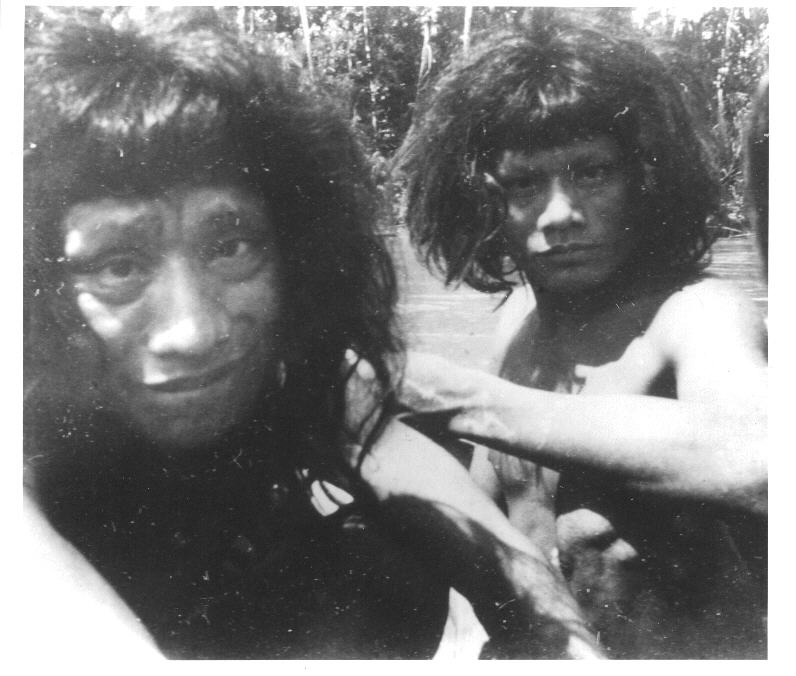
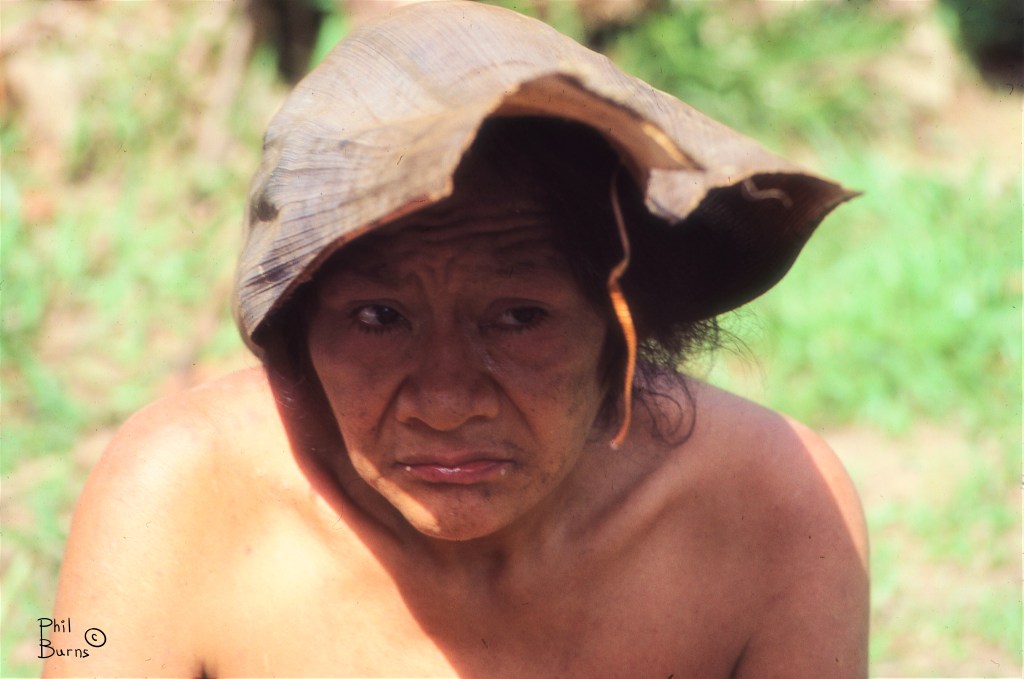
At least, we were dry. I thought of the nomadic Yuqui, hiding somewhere out there in the forest. The jungle canopy of leaves would not give much protection from the elements, at least, not in a hard rain like this. The Indians might cut a palm frond to hold over their heads, but, at best, that made a poor umbrella! The people were naked, and their skin would be wet, even dripping water. Even in the jungle, high altitude rain was cold and could chill a warm body in a short time. I pitied the jungle dwellers; glad I was not standing in their shoes! What? Yes, I know, they didn’t wear shoes or clothing of any kind!
After being camped at the Pension for a week with no rain, our bathing puddle was beginning to dry up. The swamp where we got our drinking water was shrinking in size, too. We could always go to the river to bathe, but we would have to walk the distance and though we might get clean down by the riverside, by the time we walked back to camp, we would be hot and sweaty, again! With three days of rain the swamp was replenished, and our bathing puddle had became a small lake. A great lake! At least I thought so. With the puddle full and overflowing, we could stay close to camp to clean up after a hard day’s work or hike.
In the rainy season, even if no rain fell, the humidity was high each day, and climbed higher if it did rain. After my evening dipper baths, I usually put on clean clothes, the same ones I would wear the next day. At night I removed them, thinking I was taking off a dry shirt and jeans, but come morning they felt like I washed them during the night but forgot to put them in the dryer. They were damp and it took a while for my body to acclimate to the wetness. Our bedding, too, always felt wet when we crawled in at night. I wanted to hang it all in the sunshine, but the clouds blocked the drying rays of the sun most of the time, so dry clothes and a dry sleeping bag stayed but a dream!
I wondered what the mosquitos ate when we were not around. For every blood sucking insect I killed, two or three more rushed to avenge their dead comrade. My elbows and knees suffered the worst torment because the material of my shirt or jeans was often pulled tight across the joints by the normal movements of life. That made it easy for the pests to penetrate the denim with their beak and reach my skin. At night, in deep slumber, there was no longer a concentrated effort to keep my knees and elbows a safe distance from the net. From the itching and welts I encountered in the morning; I knew the thieving six-legged pirates had sat at the bar all night and drunk their fill of Phil!
There was not a corner store or supermarket close by us. All our food staples had to be bought in the city of Cochabamba, then flown to our base on the Rio Hediondo. From there it had to go three or four hours by boat before being loaded on the swamp bogie to make the final leg to our camp at the Pension. There wasn’t room for lots of nonessential items. We had flour, sugar, pasta, and spices to make it all palatable. We didn’t have lots of vegetables, though we might eat a palm heart now and then. Sometimes, when the married men switched from manning the Pension with us to caring for our settlement on the Hediondo, the boat would bring us a bag of potatoes, a stalk of plantains, or some yuca. Each of those could be boiled or fried. Even in isolation, I think we ate well!
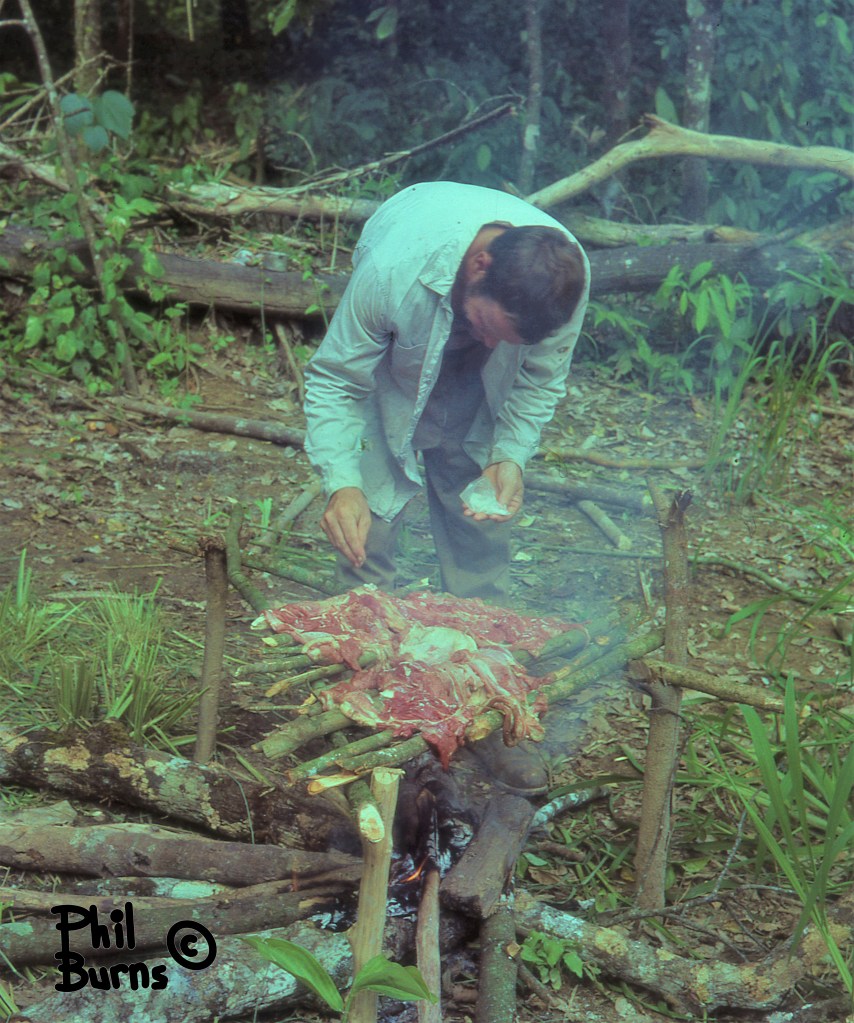
Wally Pouncy was our chief cook and he did a good job. He even made treats like deep fried donuts and fritters. He made globs. That was an excellent way to use up oatmeal!
Denny Decicio tried his hand at baking, yesterday, and made a batch of bread. His oven was a five gallon can with the top cut out. There was no real way to control the heat. His first batch of rolls came out of the “oven,” white on the tops, and black on the bottoms. He faired better on his second batch of rolls and two loaves he baked using tin cans for pans. All things considered; they turned out well and five men had no trouble making them disappear, even the black and white ones!
The weather finally cleared by three o’clock in the afternoon and gave us a pretty night, clear with a full moon. Usually everyone was in bed by seven o’clock, seven thirty at the latest. We went to bed when it got dark. Our mosquito nets were our only fortress against the vampire bugs! By the light of a candle burning outside our nets we would read or write until the Sandman closed our eyes in sleep. Candles were usually snuffed out by nine o’clock.
I just took my “nightly bath.” The water was so cold after the rain that it took my breath away! It was all I could do to keep my balance on that slick old board as I poured chilly water down my back. The night air felt good on my skin, but I couldn’t stay out for long or the mosquitoes would suck me dry!
February 22,1978
The morning greeted us with a cloudy disposition, but no tears fell forcing us to stay under the shelter of the thatched roof. The weather looked like it would clear, so Wally, Denny and I left camp to check the gift trail. Instead of walking, we rode on the swamp tractor. Riding the buggy was harder on my body than walking, I thought. However, it could go faster than we could walk so we saved time getting to where we were going. It had no shock absorbers. The driver sat on a metal seat like farm tractors of old were equipped with, so there was some give and take, and up and down, for him.
Us passengers sat on the wooden box we had built around both sides and behind the seat. There was no give and take in that! For tires, the tractor used DC3 airplane tires that were big enough to make the bogie float so we could cross rivers with it. For traction, heavy rubber cleats were vulcanized straight across the tires so they could grab the mud, sand and whatever else we traversed, and pull us out of, or over most obstacles. However, the cleats, even when the path was good, made us go bumpety, bumpety down the road, making a frenzied vibration that threatened to dismantle my skeleton. Then there were the big bumps, like sliding sideways and abruptly bottoming out in the deep ruts made by the logger’s heavy equipment. These twisted the bogie and our bodies as we hung on tight so we wouldn’t fall off the box into the water. My tall, lanky frame had no extra padding and every bump, big and little, jarred my bones!

We drove for an hour and ten minutes down the road. Again, I was amazed at the water and mud we went through without getting stuck. I had walked this same road only days before, and it took us two and a half hours to walk the same distance! We stopped after an hour and a half of driving to save gas and walked the rest of the way to check the last of the gifts we had hung.
About two kilometers from the boggy, we were surprised when we met two Bolivians coming around the bend. They carried machetes and one of them carried a 16 gauge shotgun that had seen better days. If fired one more time, it looked like the barrel would split wide open, exploding, maybe killing, or maiming the shooter. Like the shotgun, their pants looked to be on their last legs, Their trousers had split out long ago and were patched with brightly colored cloth in the crotch, the knees, and other places of extreme wear. In the Bolivian frontier, almost anything could be taken for high fashion, I thought!
I joined the contact team without studying Spanish for a year, the way most new missionaries did upon arriving on the field. Therefore, I was at a loss when it came to situations like meeting Bolivians in the middle of nowhere. I only got the gist of what was being said. Wally did most of the talking and Denny threw in a word or phrase, now and then.
When the men turned around to go back the way they came, my coworkers told me what they had said. Apparently, eight loggers came in three days ago to start work. They thought the jungle was dry enough so they could cut down the valuable mahogany trees. The recent rains proved them wrong. They were leaving tomorrow because there was too much water in the jungle to work after the recent rains! They told us they had not seen any sign of the wild Yuqui in the area. They saw our gift racks, but said the gifts were gone! In other words, the loggers helped themselves!
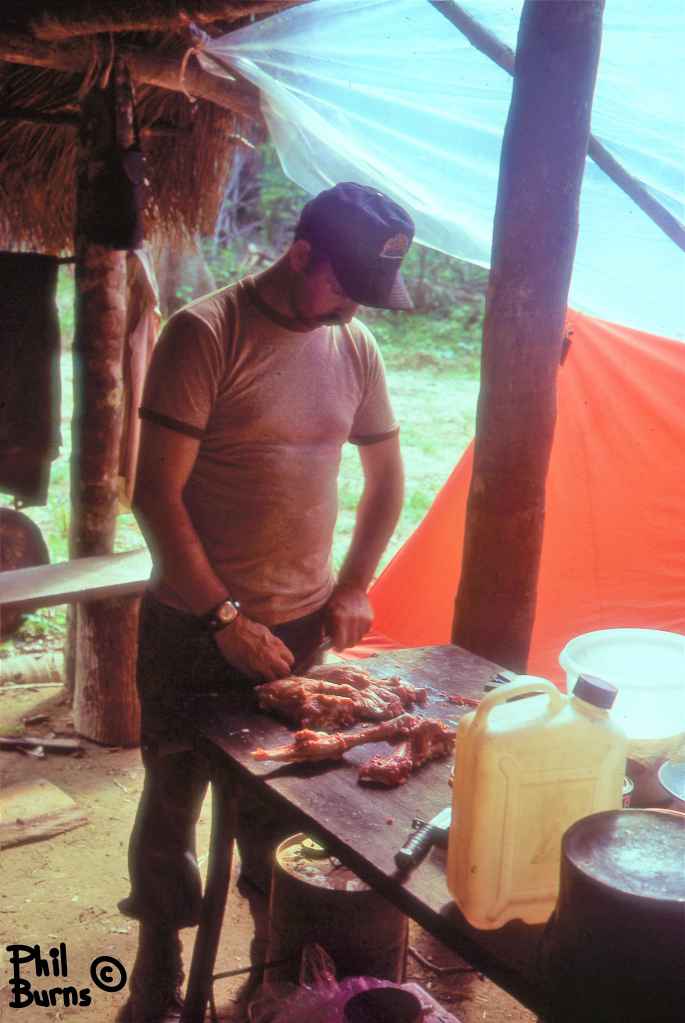
As we rode the swamp tractor back to camp it sprinkled on us, just enough to dampen our clothes. The weather was practicing for the big one, it seemed. It sent two more pathetic sprinkles our way before breaking the dam of heaven and sending a deluge of rain upon us. By then, we were already back in camp, and better yet, Matt Castagna and Denny had time to go hunting and soon carried a buck, good eating meat, into camp. Denny, like the last time, shot the deer close to our encampment.
We were happy, so let it rain! We had the woods to ourselves; the loggers were gone! The gift trail was checked and ready for the nomads to find the treasures we put out, and to boot, we had fresh meat!
When we told Alan Foster that we had encountered loggers on the road, but that they were leaving in the morning, he said God had answered his prayers! He had prayed that the weather would be dry enough for us to move to the Pension, which it was, then, that it would rain enough to keep the loggers out. Three days ago the Bolivians moved in and three days ago it started to rain, and tomorrow they would be gone!
One of the unpleasantries of life in the jungle was that the damp environment was a perfect breeding ground for cockroaches. The most prevalent species out there was the wood roach. It had wings and could fly and could grow up to two inches or more in length. We could step on them and smash out all their guts. Apparently, the insects didn’t like being squished because they always gave off a foul odor when we squashed them. However, they didn’t die, at least not right away. Four or five days later, the vile bugs would still be crawling around haunting us. Nobody liked them!
After supper most of us had already climbed into our mosquito nets. Wally was one of the last to do so. He climbed in and tucked his net under his bedding so mosquitoes and other pests couldn’t get inside. He hadn’t lain there very long when he gave out a loud yell. I looked to see what the problem was, and his net was being stretched and pulled, first one way and then the other, bulging here, collapsing there, as he tried, in vain, to get his feet on the ground. His desire to quickly flee was impeded by his net still being tucked under his bedding. He finally escaped the confines of his mosquito net, stating that a big roach had startled him by crawling across his body. Not a pleasant event for anybody! Matt had a spray can of bug killer and asked Wally if he wanted some with which to dispatch the nasty trespasser. Wally replied, “No! Just give me a shotgun!
Such is life in the big jungle!
FIN
This story was from the category Tales From Green Hell. If you would like to read more of my experiences in the jungles of Bolivia, please click on that link below.
More Writings by Phil
- Life Happens (31)
- Love Stories (4)
- Mission Related (1)
- Over-The-Hill In Europe (5)
- Stories of the Mbia (the People) (2)
- Tales From Green Hell 1978 -1979 (60)
- Theme Writing 1971 (2)
- This And That (26)
- Uncategorized (1)

 Writings By Phil
Leave a comment