

May 3, 1978
This morning, we finished clearing the corner where we would rebuild our houses. There were quite a number of tall Palo Santo trees along the edge of the swamp. The tree was one of the prettiest trees in the jungle, I thought. Though short in a forest of giants, most stood proud and straight. They looked like they would make great ridge poles for building a house. They could grow 30 feet in height or more. It had big shinny leaves. Making it stand out even more in that jungle of a million trees was that nothing else would grow under its branches. No weeds, grass, or saplings sprouted in the tree’s noonday shade.
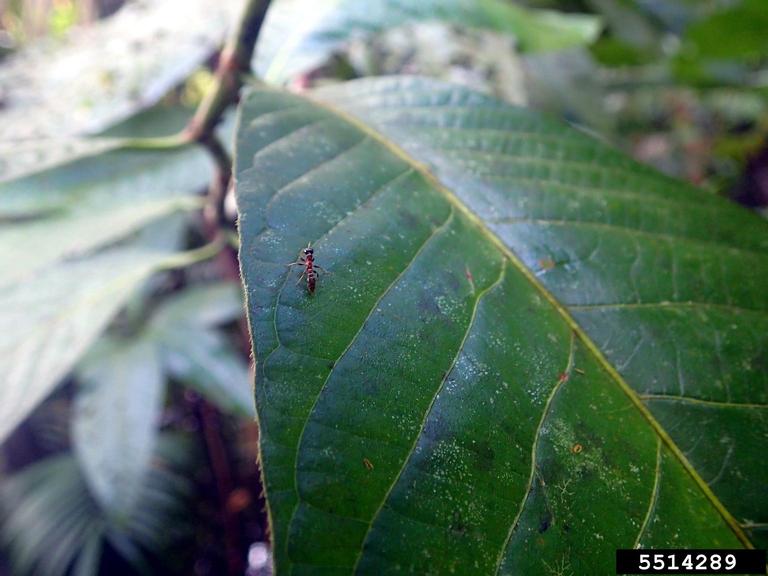
It was called a Palo Santo tree, a holy tree, or saint tree, at least by lowland peasants. Later, I heard others called it a Palo Diablo, or Devil tree. That made more sense because beauty was only bark deep on this nefarious tree. As near as I could tell, its proper given name was the Tangarana tree.
Despite its pretty appearance, I wanted nothing to do with it! That was because it was home to thousands of ants, a type of fire ant. The tree trunk and the branches were hollow. Most of the ants lived and traveled up and down the tree inside those tunnels. There were entrances or exits at every joint, bud, or branch along the trunk, limb and branch. Most ants stayed inside, but not all. There were always a few climbing around outside on the trunk or patrolling the leaves for intruders.
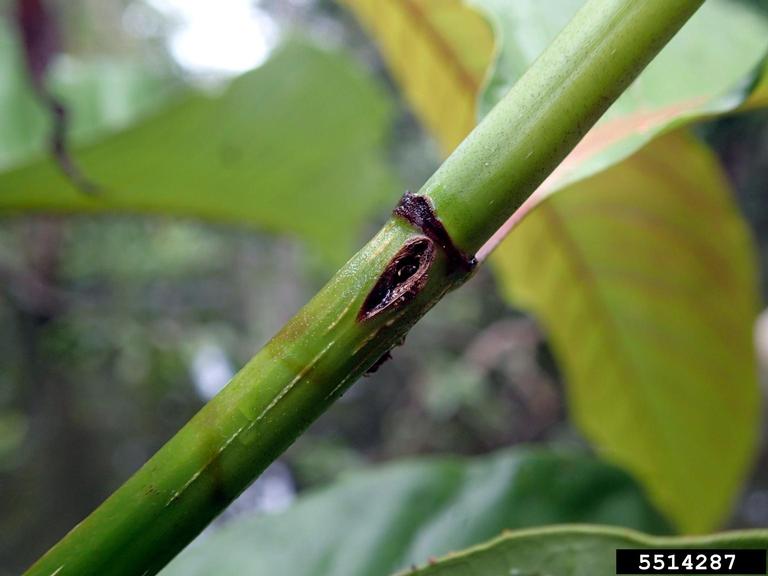
There, they would sink their mandibles into your flesh. They hung on tight. They drov
I did not know how many ants lived in a colony, but to me, one was too many! If you bumped the tree you usually got one of two ants on you. If you hit it with an axe, the tree would rain “fire.” Most times, it seemed the ants crawled up your clothes until they found bare skin around your neck. There, they would sink their mandibles into your flesh. They hung on tight. They drove their stinger into your skin, stabbing over and over like some crazed mini murderer! I found their venom worse than that of ground-living fire ants. The sting would hurt for about half an hour. Then it would gradually subside. However, the site would stay sore to the touch for two days. I got stung six time today. No fun!
The ants take care of the tree by snipping away at any vine, blade of grass, or tree sprout that tries to take root in soil claimed by the ant tree. They also attack any animal or insect that tries to eat the leaves. In return, besides giving the ants a home, the tree produces nectar for the ants to eat when flowers bloom to grace its branches. Also, the tree has glands at the base of each leaf that ooze out a sweet liquid for the ants to eat.
When a tree was cut down, the queen ant and all the worker ants died, and that would be the end of the colony. If there were princess ants, future queens, they could move on to find another Tangarana sapling in which to move, lay eggs and build a new nest. As the tree grew, so would the colony. and soon there would be thousands of the six legged little devils!
Though I never heard of the practice in Bolivia, apparently there are some locals throughout the Amazon basin where the ants were used as a punishment for infidelity! Adulterers were tied to the tree to suffer the venom of thousands of stinging ants. If the agony was inflicted until the wandering one was dead, it would certainly give new meaning to the phrase in the marriage vow that says, “Till death do us part!”
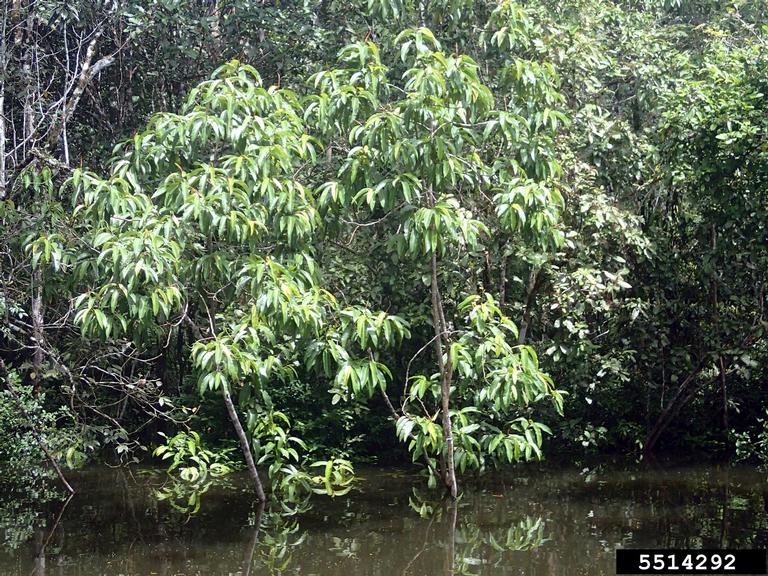
Palo Diablo saplings are flood tolorant and often grow by swamps and river banks, though I have seen them growing in high jungle.
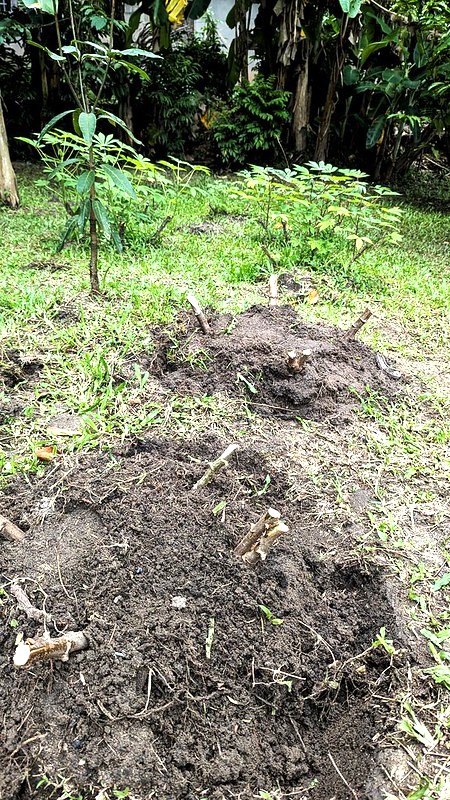
This afternoon, after our Yuqui class, Matt and I planted the back forty with yuca. The edible part was a tuber and grew underground. It sent up a long woody stalk an inch or more in diameter. To plant more yuca, twe cut the stalk into pieces about eight inches long and these were pushed into the soil a little more than half their lenght. The yuca was not really for our consumption, but for the Indians should they come out of the jungle. It would take six to nine months to mature and be ready to eat.
Fin
This story was from the category Tales From Green Hell. If you would like to read more of my experiences in the jungles of Bolivia, please click on that link below.
More Writings by Phil
- Life Happens (31)
- Love Stories (4)
- Mission Related (1)
- Over-The-Hill In Europe (5)
- Stories of the Mbia (the People) (2)
- Tales From Green Hell 1978 -1979 (60)
- Theme Writing 1971 (2)
- This And That (26)
- Uncategorized (1)
 Writings By Phil
Leave a comment