

September 8, 1978
We cruise at 90 knots. Rain pelts the plexiglass, attacking in full force. Defeated, it runs away in rivulets of frustration. The drone of the twin turbo jets is too loud for words. I sit, lost in thought watching the tempest outside, feeling the storm inside: What am doing here? Am I a fool? . . .
Below, the jungle looks like a formidable fortress, its roof a green mosaic. Its towers, tall trees. Their branches stretch heavenward, beckoning to us like the arms of skeletons bleached white in the sun. Today there is no sun. Pockets of clouds shroud some of the higher trees. The moat is a brown stream of bends and horseshoes. In only minutes, we will be down there like prisoners in the catacombs, wet and cold with only a compass reading to bring us to the light.

I glance at Tibaquete. Anxiety stares from his eyes too, but for different reasons. Flying above the trees is not his element. He belongs beneath the leaves, a Yuqui Indian needing neither compass nor roadmap to go and return. As we bank into a tight turn his fingers dig into my knee in fear. I look at him and smile. A grin breaks his stoic face- a gaping hole where teeth used to be. His fingers relax, his hand remains, its warmth feeling good in the drafty cockpit.
The helicopter swoops down onto a carpet of long swamp grass, flattening it with the breath of its rotor. I push open the door and jump down, down into the ooze and the mire. Tibaquete follows, then Alan. In seconds we are soaked to the skin. We crouch in the rain, cowering from the downward thrust of the copter as it rises, then skims the grass building speed before it zig zags up and over the trees to pick up our second team that will survey the other side of the river from where we are.

We are alone. I turn my nose up at the pungent odor escaping the muck that swallows our legs to our knees. I set my compass to 240°W, point the direction to Tibaquete, then plunge after his mauve shirt and stripped pants. With no regrets, we stagger out of the goo onto the threshold of the jungle. How many swamps? How many streams? How many thickets of thorn and brier lie between here and our pickup point? The rain only laughs as it dribbles from leaf to leaf, seeking the safety of the ground.
Tibaquete moves out, walking fast. His eight-foot-long bow and arrows hardly slow his pace, even in the thickest brush. In my haste to keep up I trip over vines, and it seems that every thorn bush reaches out and grabs my shirt. My mind is jumbled too. I trip over the “what if’s:” What if the terrain is so rough, we don’t make the river by four o’clock? What if we have to spend the night out here? No mosquito nets, no blankets, no tent! What if my compass is wrong and we are going in the wrong direction? I force these thoughts out of my head and try to concentrate on looking for broken branches (Yuqui trail markers), old camp sites, and other signs that the Indians we are looking for have been this way. In my head, I sing the old chorus, “It will be worth it all when we see Jesus.” The words are of little comfort. I throw them away, a trite cliché doing nothing to warm my body or dry my clothes!
The rain has stopped, but water continues to drip off the leaves. The sun still hides his face behind the clouds. Tibaquete hears troopers (wild pigs) and begins to yell. He mimics long screams of agony, interspersed with the grunts and groans of a dying pig. His bow and arrow are held at ready. The beasts do not come and thereby save their own skins, a disappointment to Tibaquete, I’m sure.

We cross a shallow stream without hesitation–a body can only get so wet! On the other side is a trail, the machete cuts still green, only a couple days old. Loggers! The woods are crisscrossed with their trails and roads, now. Alan tells Tibaquete to let us go first if he sees or hears nationals. They will only see an Indian with bow and arrow and suspect he stole the clothes- hasn’t there been enough killings?
The sun is shining. My shoes and socks dry over the fire. Already I forget the hardships of the day. There is peace and solitude here on this river beach, yet the feeling is incomplete. I am saddened because we did not find the Yuqui. Perhaps our other team fared better.
The slapping of rotor blades beating the air interrupts the silence of my thoughts. I make a mad scramble for my shoes, not caring how much sand I wear home. A tornado sandblasts us till the slowing craft unites with the earth. We rush forward as the doors swing open and are greeted by the smiles of the pilot and another missionary. Above the roar of the engines they shout, “They found Indians”
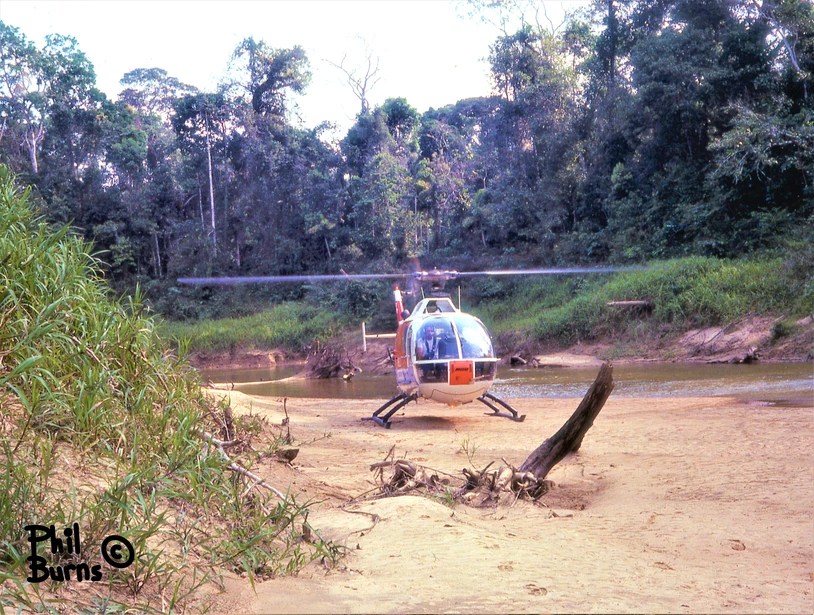
We fly for home. I read the note Alan handed me from our other team. They found a trail only a couple of days old. After following it a ways, looking at the footprints of men, women, and small children, their Indian guide estimated the group to be about 80 souls. They were so close, he told them to whisper. It is only the beginning, I know, but now we know where to begin. We know where to set up camp, cut trails, set out gifts, and prepare for a contact.

I feel tears filling my eyes, but blink them back, too tough to cry. I was wrong. Seeing Jesus is not just for the far-off future. I see Him now leading us to the right spot. Everything was worth it. I stare through the plexiglass. The jungle is no longer dreadful, but exciting. She has revealed her long kept secret; We know where she has hidden these nomads for so long.
I look at Tibaquete and intercept his gaze. He smiles, the twinkle in his eye making up for his lack of front teeth.
FIN
More Tales From Green Hell
- https://fillburns.com/2025/03/19/just-dropping-in/
- https://fillburns.com/2025/03/19/just-dropping-in/
- https://fillburns.com/1978/02/10/swashing-through-green-hell/
- https://fillburns.com/1978/05/10/what-lurks-in-the-darkness-2/
Something Different
- https://fillburns.com/2024/05/26/root-bound-not-me/
- https://fillburns.com/2022/06/27/the-big-seven-zero/
- https://fillburns.com/2021/08/14/the-girl-with-dirt-on-her-face/
- https://fillburns.com/2020/08/13/horsing-around-2/
Photos And Commentary
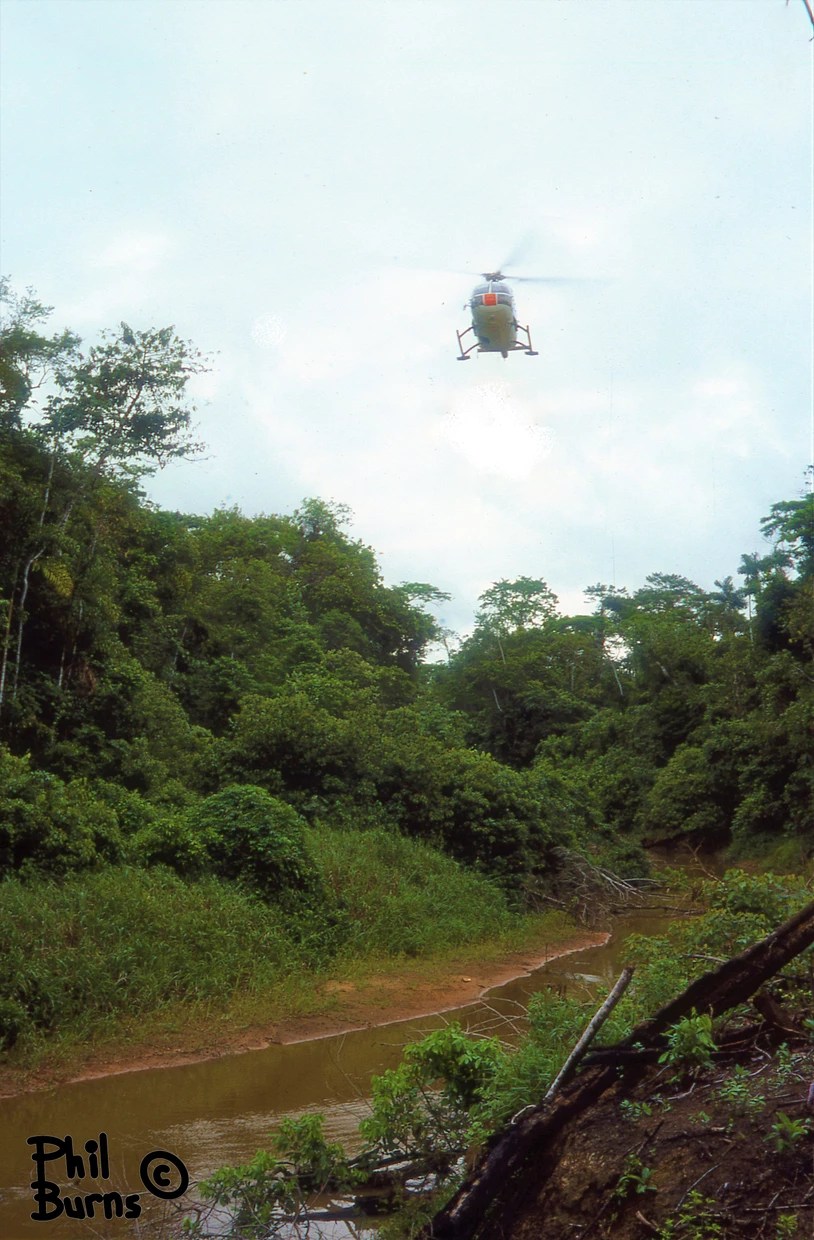
The survey trip in the story would have taken us days, if not weeks to hike that far though uncharted jungle, and once we finished the survey we would have had to walk out again. After finding signs of the Yuqui, we moved our base from the Arroyo Hediondo (Stinky Creek) to the Rio Vibora (Snake River), a river close by the Rio Chore where this story took place. To salvage the tin roofs and still usable lumber from our old houses and move it to our new base would have been a daunting task, indeed, if the helicopter was not there to assist us.
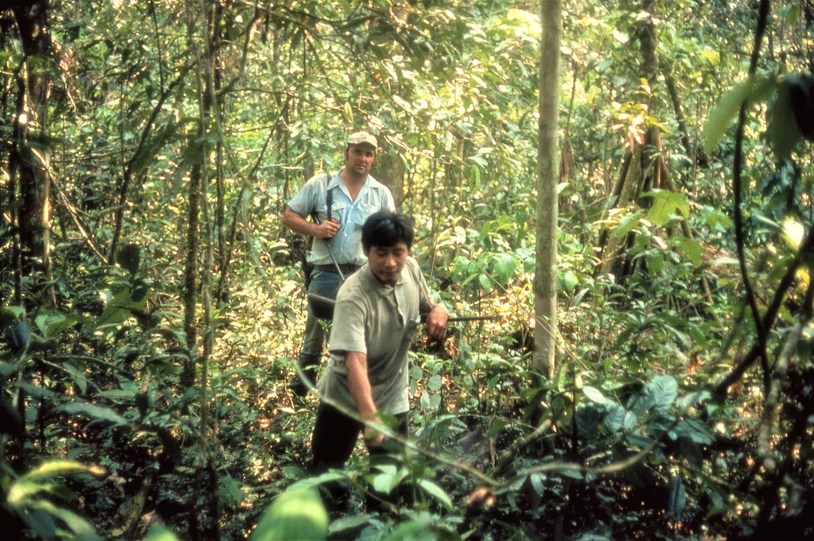
In contrast, the jungle was for most of the year, hot and humid. If we were working, clearing land to plant bananas and yuca, we sweated. If we walked the gift trails to see if the Indians had taken our gifts, we sweated. Our clothes were often dripping wet from our own perspiration.
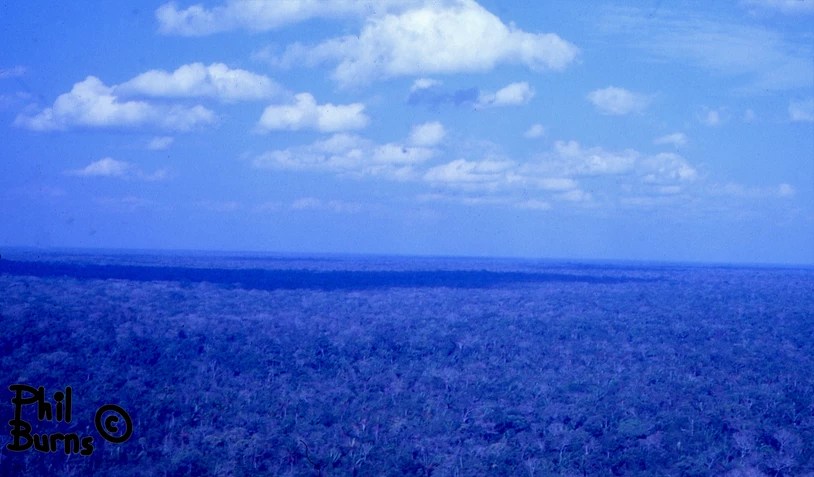
If we flew by helicopter, or later, by airplane, when we cleared the over 10,000 foot peaks of the eastern Andes and dropped into the lowlands, the jungle was an endless ocean of green stretching to the horizon and beyond. Loggers and oilmen were slowly making inroads into its vastness. Santa Cruz was a major city cut out of the jungle and there were smaller towns, but much of the jungle was uncharted and we were perhaps the first Gringos to enter its wide expanse. Somewhere in the millions of acres of green, the illusive Yuqui Indians still wandered. We knew there was at least one group of them, maybe more.
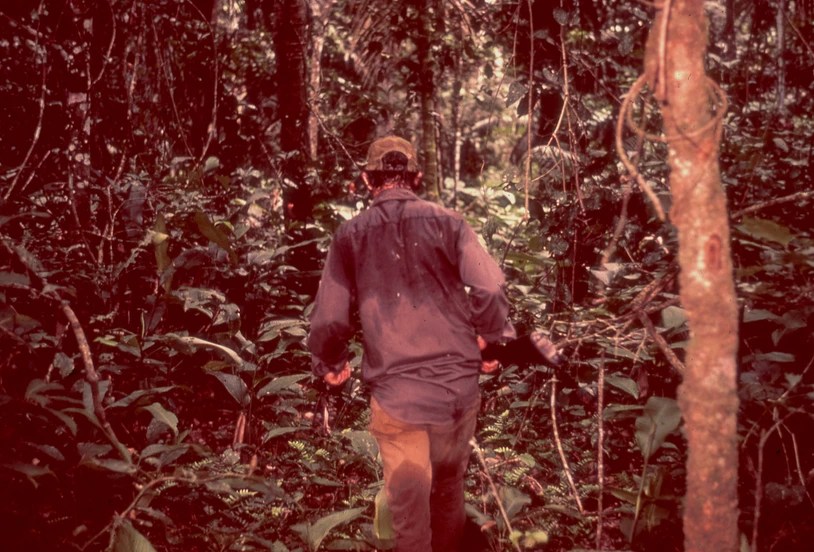
When we were out in the lowland forest and it rained, we got soaked to the skin. If it didn’t rain and we were out, we sweated like we got rained on. Wet clothes seemed to the the normal thing thing when we were out and about. When the rain stopped and the sun came out, the humidity rose even higher and we sweated even more!
.
The story I shared today was my prayer/news letter for September, 1978. It was written to inform my supporters and other people who had signed up for my updates on what I was doing. I had less than 75 people on that list. One of the recipients was New Tribes Mission Headquarters. I had no idea of how they got material for their monthly magazine, Brown Gold, but I soon found out!
I was in Cochabamba for a break from the Jungle about the time the magazine reached Bolivia. It was quite a surprise for me when my coworkers in the city would come up to me and say, “Good article!” I had no idea what they were talking about, “Say what?”
They had to explain to me that my story about tracking the Yuqui had been printed in the mission magazine. The editor had titled it, “We Found Indians!” I had to run to the mailbox to see if my copy had arrived.
After I had returned to the jungle and the contact base, another coworker who was out in the city after me, told me some repercussions of the story. Apparently the director of Helimission was in Cochabamba about the time the magazine came out and somehow had read my article. He came to the mission office with the magazine in hand and demanded to know why Helimission was not mentioned in the text of the article, and if not there, at least it could have been printed on the side of the helicopter in the artist’s depiction of the event.
From my perspective, I was writing for a very small audience and didn’t feel the name of the mission was relevant to my readers. Also, I did not not draw the picture. A mission artist in the States did it, and as I did not mention Helimission in my letter, he could not have included it in his drawing even if he wanted to. All this had to be explained to the man. Things were smoothed over and his mission continued to help us for my remaining time in Bolivia as a single missionary and then some.
However, I’ve always wished I had known of the possibility that my letter might go farther than my small group of prayer warriors. Maybe then, I would have included the other mission’s name in my letter and saved some consternation on the part of a “brother” who desired to see his small mission get some recognition of what the helicopter could do for the world of missions. I made sure to say Helimission a bunch in today’s post. To be honest, I don’t even know if it is still in operation today, but 47 years ago, it was a big blessing for a small group of American families and this single guy that called the Rio Vibora home!
 Writings By Phil
Leave a comment