
September 27, 1978
With our helicopter survey a couple weeks behind us, where we found fresh signs of the nomadic Yuqui, it was time to find a way into the area by land. Alan Foster, Matt Castagna and I left the city of Santa Cruz on an early morning bus. We were headed for the end of the road, to a frontier settlement called Puerto Grether. From there, we would enter the unknown jungle hoping to find high ground on which to build a base close to where we found the Indians.
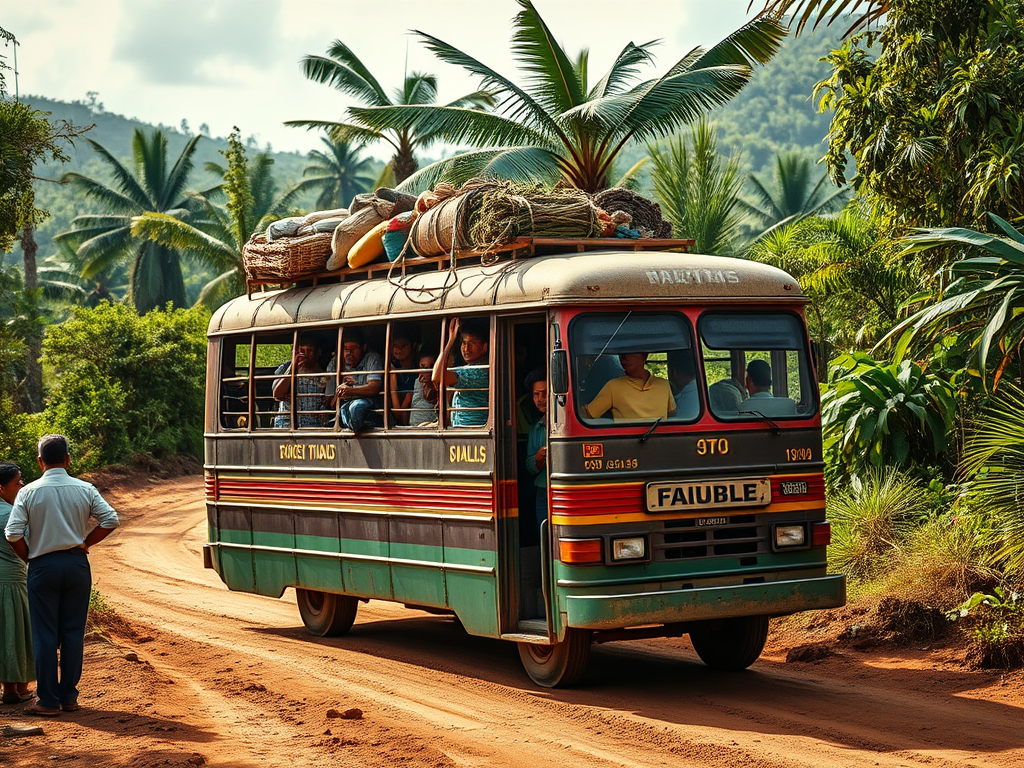
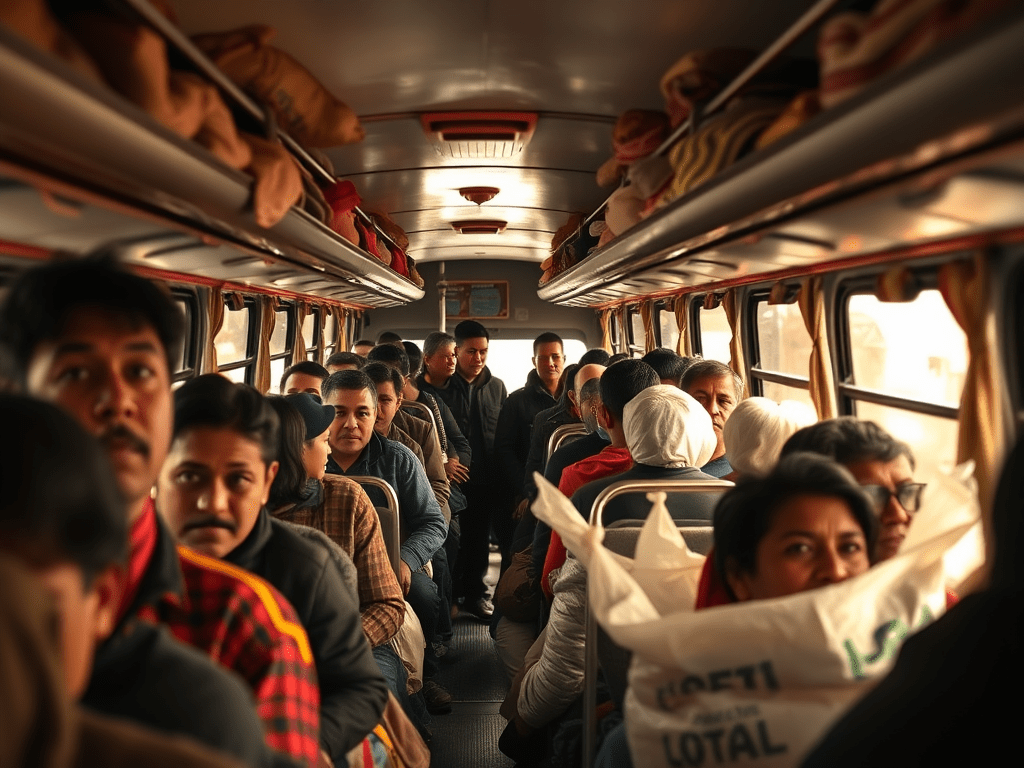
The bus seats were spaced far apart, so we were able to keep our packs with us rather than putting them on top the bus or in the storage below deck. The bus was constantly stopping and starting, picking up people, letting them off. Sometimes the aisles were filled with big bags of cargo, the owner of the stuff sitting on top of it or standing close by. Some boarded the bus with chickens dangling upside down from their hands, the bird’s feet all tied together with a piece of cloth. One lady got on carrying a gunny sack with piglets in it.
Besides the roar of the motor, the bus was noisy! There were animal noises, people noises, crying babies, people speaking Spanish, people speaking what I believed was Quechua, a language spoken by most of the people in the mountainous regions of western Bolivia.
Many of the passengers were highlanders who had moved to the lowlands to be able to own land and farm it. The men blended in well with the typical lowland Bolivians and dressed in shirts, trousers, and sandals. The footwear was often made from old tires. Their women, on the other hand, dressed like they did when they still lived in the cold. Many wore more skirts, blouses, and sweaters than the new climate required. Layered clothing was great for the cold of the Andes mountains, but in the tropics it just made one sweat more.
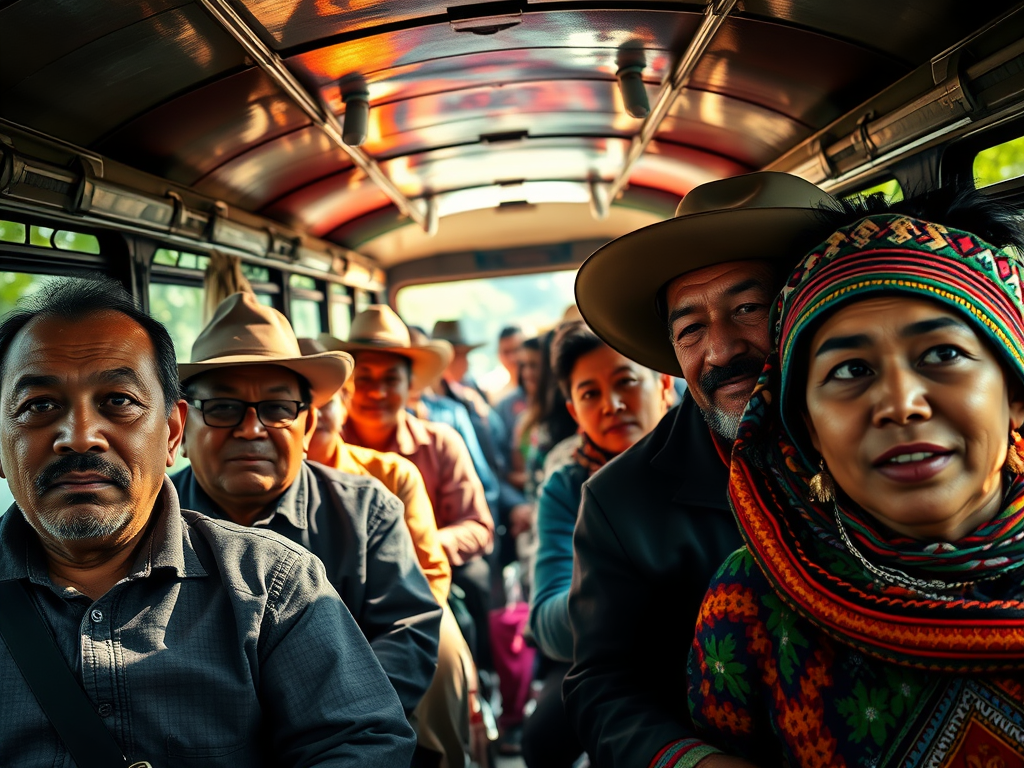
So there were smells, too; animals smells and unwashed people smells. I was thankful we had all gotten a shower the night before at the mission home. There was a good chance we wouldn’t smell so nice when we came out of the jungle in a few days time. That thought kept me from being too critical of those around me.
We got on the bus early so we all had a seat. The farther we went, the fuller the bus got, and the aisle was soon packed with men and women who had to stand. The Bolivian men did not give up their seats so that a woman could sit. I saw two young children do so, but they did it so that a more elderly person could sit. Was a tall gringo expected to give up his bus seat so that a woman could sit down? I didn’t know. If I did so, I knew I would spend the next few hours banging my head and shoulders on the roof of the bus, it was that low! I was sure that would make me feel like a battered pretzel when it came time to get off the bus. I hated to see the women standing, so I looked out the window, instead. I still felt guilty about it, though!
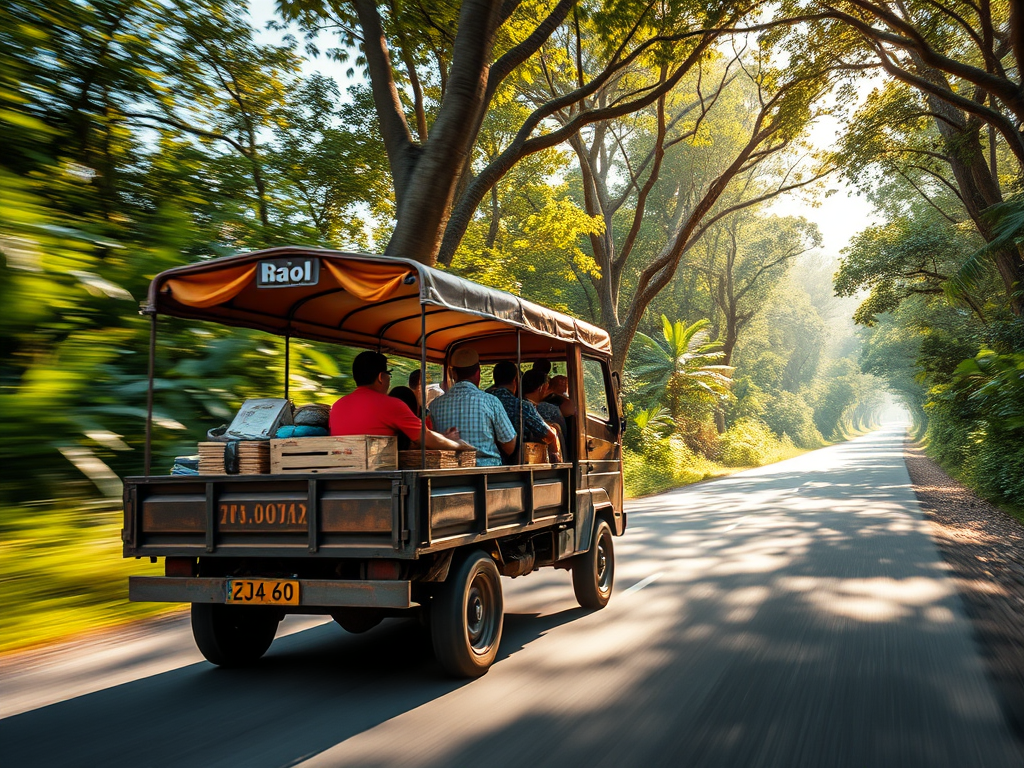
We crossed the Rio Yapacani. and shortly after arrived at the next town. It was the end of the line for the bus. A “colectivo,” a pickup truck with a canopy over the back was waiting, nearly filled with people and cargo. We piled in and soon found ourselves in a little town, at Mile 17, called San German.
There was a little store there where we got something to eat. I bought a tin of sardines and a dried out “pancito,” little bread, like a roll or bun. I also bought a couple one liter bottles of soda pop. I was so thirsty! Having stuffed our faces, we walked to the far edge of town. We found some shade on the side of the road where we sat waiting for a truck going our way. Our destination, Puerto Grether, was still 38 miles away.
While we waited, I wrote in my journal. Finished with that, I had barely put my notebook back in my pack when a truck came. We were given permission to climb on board along with three of the waiting Bolivians.
I sat on the boards of the truck bed and used my pack for a backrest. Alan was going to do the same, but one of the Bolivians, knowing he spoke Spanish, explained to him that if one sits on something hot, like the truck bed, and there was a breeze, well, one would get sick! I had heard that bit of folklore before. I did not think any of us believed it, but Alan, wanting to talk to the Bolivians, heeded their warning and sat on his pack. I decided to take my chances and stayed on the bare boards of the truck bed,
True, the boards were superheated by the afternoon sun, but the heat was not what gave me my distress. I didn’t get sick, but I was miserable. The boards were hard, and the truck was old with years of overloaded abuse. The shocks were shot! My problem was that I drank too much soda pop earlier and the afternoon was not hot enough to sweat it out of me. My bladder screamed in agony at every bump in the road. I was so glad when the driver stopped and said that was as far as he was going. I just had to find a bush, something I should have done hours before! We were still 25 miles from our hoped for destination.
We waited three hours for our next ride. As we hoisted ourselves onto the truck, we noticed a pile of garbage towards the front of the truck bed. As we tried to settle in we smelled it. It was not pleasant. There were rotten bananas and other unnamed, decomposing stuff that should have been thrown off a long time before. The stench was awful! However, trucks going our way were few and far between. There was no guarantee another one would come our way before nightfall. We would just have to hold our noses until we got as far as that truck would take us!

Seven miles out of Puerta Grether we stopped by some massive logs laying by the side of the road. It was the end of the line for us on that truck. While we waited for another truck, we watched our driver and his helper load two logs onto the flatbed. They got a couple short logs to use as ramps, then with two hand winches they slowly pulled the logs up the ramp and and onto the truck. The winches were old and rusty. Sometimes the men straddled the cable. Sometimes they stood on it as they pulled the long pry bars that drove the winch. The logs were heavy and I was afraid a winch would break or a cable snap and kill one of the men in front of our eyes. Thankfully, my fear did not become reality, and they finished loading the logs, tied them down, and headed back down the road leaving us alone.
It was 5:45 o’clock. Would another truck come and take us away before dark? I hoped so. This place was infested with matiwi, a small biting gnat. Its bite left a small blood blister on the skin and it would itch like crazy! We were being eaten, alive!
There was a small store off the road a bit, nothing much, just a thatched roof with bamboo walls. We walked there and bought some snacks. I bought a soda pop, but only one this time. I was not doing that again!
More Tales From Green Hell
- https://fillburns.com/2025/03/25/murder-in-the-swamp/
- https://fillburns.com/2025/02/11/well-slither-me-timbers/
- https://fillburns.com/2025/01/31/the-execution-of-nighty-mouse/
- https://fillburns.com/1978/05/13/kitty-kitty-nice-kitty/


 Writings By Phil
Leave a comment