
September 28, 1978
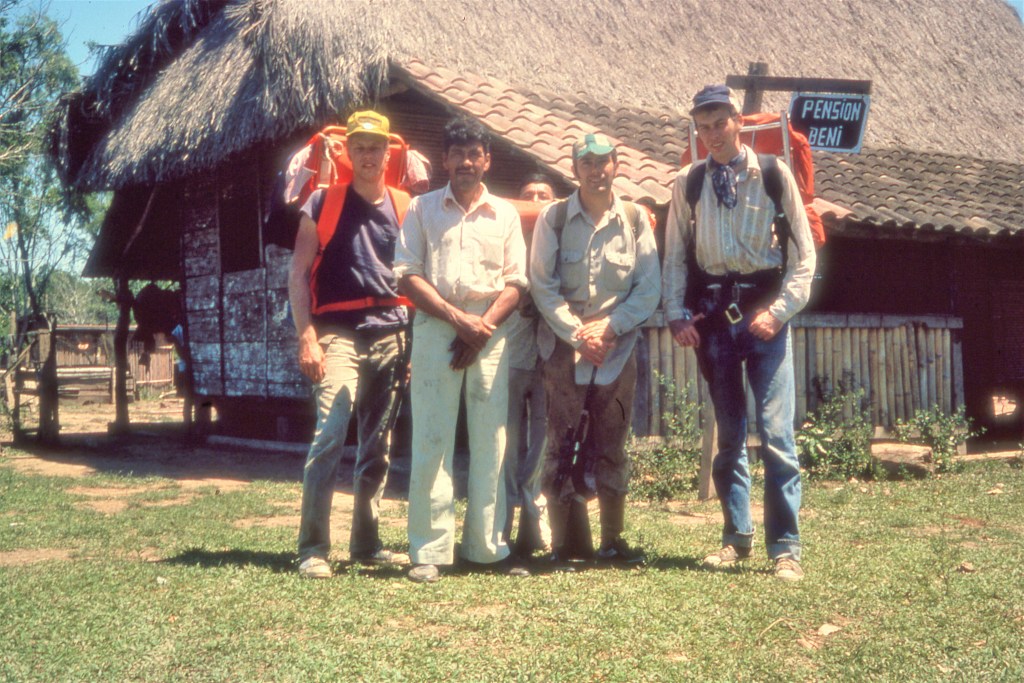
I failed to write in my journal, 47 years ago, how we traveled the last seven miles into Puerto Grether. I’m guessing we hoofed it. September 27th was a long day of hitching rides and hours of uncomfortable travel by bus and truck. Long wait times between rides added to our fatigue. If we made our destination before dark, we should have been sufficiently rested to start our walk-in survey of the wild Yuqui’s domain. If we hiked to town in the heat and humidity the next morning, September 28th, even that short hike would take a toll on our energy and any desire to punish our bodies more by hiking off into the unknown.
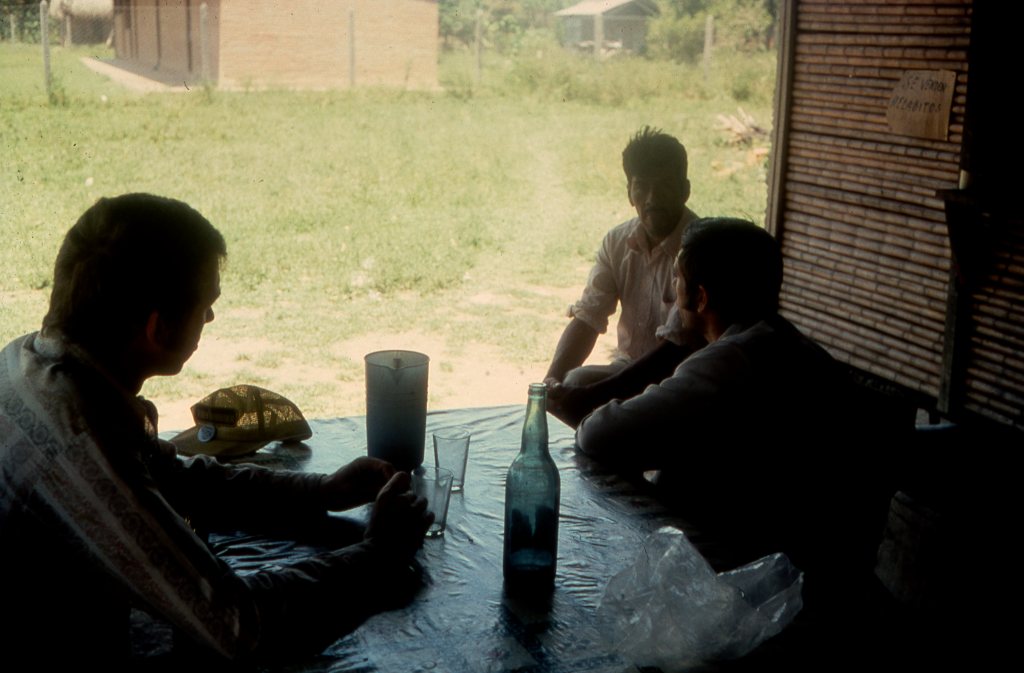
For whatever reason, we opted to stay in town one more day and rest. Besides, at the Pension Beni, our hosts, Don Miguel and Doña Della liked to talk. Sadly, I understood very little Spanish. Matt knew a bit more, and Alan was fluent in the language, having grown up in Bolivia. Every once in a while Alan would stop his conversation with Miguel to fill us in on what was being said. They talked a lot about what the locals had seen during hunting trips into the jungle as to the whereabouts of the people we were looking for.
Miguel was a master story teller. Even though I had to wait for Alan to translate what he said, I enjoyed watching his weathered face crack into a smile, listening to the reflection of his voice, and seeing the sparkle in his eyes as he told his stories.
He told of one local hunter that came across the place where a giant anaconda had slithered through the grass on its way into the river. The flattened grass from the snake’s passage was almost as wide as the man’s shotgun was long. That would be a big snake! I would never want to meet it in the jungle, that was for sure.
With fits of laughter breaking his narrative, Miguel told us about a highland man who moved into the jungle and began cutting down the rain forest to make a chaco, a farm. It was really hot work, and at the end of the day the man decided to take a bath in the creek. Soap in hand, he waded knee-deep into the stream. About that time, an electric eel zapped him (600 Volts, low amps). The jolt knocked him on his bottom with a great splash. The man hastily retreated to shore and, according to Miguel, never took a bath again.
Doña Della had an old rusty refrigerator that ran on kerosene. She had it stocked with no-name-brand soda pop. A cold drink on a sweltering day seemed to make life in that dirty little place more bearable to me. I couldn’t say much in Spanish, but I could sit with the rest and sip a soda and feel somewhat included.
Puerto Grether would not be a hometown to brag about. It boasted a two-room, brick school built by the government. The rest of the residences were constructed, for the most part, from jungle materials: bamboo walls, split-palm floors and thatched roofs, some patched with rusting pieces of corrugated tin. Like the year-round residents, the houses were few.

It was not built around a plaza or Catholic church like many towns all across Bolivia. Instead, its few houses were centered around the soccer field, an open area sprouting green grass in much need of cutting. The Pension Beni, the only place in town that served as both a store and a restaurant, stood to one side. Between it and the sport’s field were tracts through the grass and dirt. Vehicles, mostly big trucks made them when they stopped to let off passengers, picked up cargo, or turned around to head back to some place more civilized. The shallow ruts and worn grass stopped right by the Pension. It truly was, the end of the road.
The town was not easy to get to, either. We discovered that, yesterday. The last forty miles of road were really just a dirt track though the jungle and banana groves. Subsistence farmers had cut down much of the rain forest and planted plantains, eating bananas, yuca, citrus and other tropical crops along both sides of the road. Come rainy season, that road would be one long mud hole, almost impassable even with four wheel drive. All year long, traffic was infrequent and was mostly trucks coming in to load valuable logs to haul to the sawmill, or to buy bananas from the farmers along the way. Few taxis or private cars braved the untamed road and ventured in as far as the Pension Beni. Motorcycles had less trouble with the ruts and mud than most other vehicles.
Someday, it was said, the new road from Santa Cruz to Cochabamba would put Puerto Grether on the map. Someday, there would be a bridge across the Rio Ichilo that was slowly eroding the river bank on the west side of the town. Until then, it was a good place to get away from it all. It was a perfect habitat for a hermit, someone minding their own business and hoping the locals would do the same to them. It would make a great hideout from the law with millions of acres of unspoiled rain forest just out your back door, a good place to run and hide for the criminal minded!
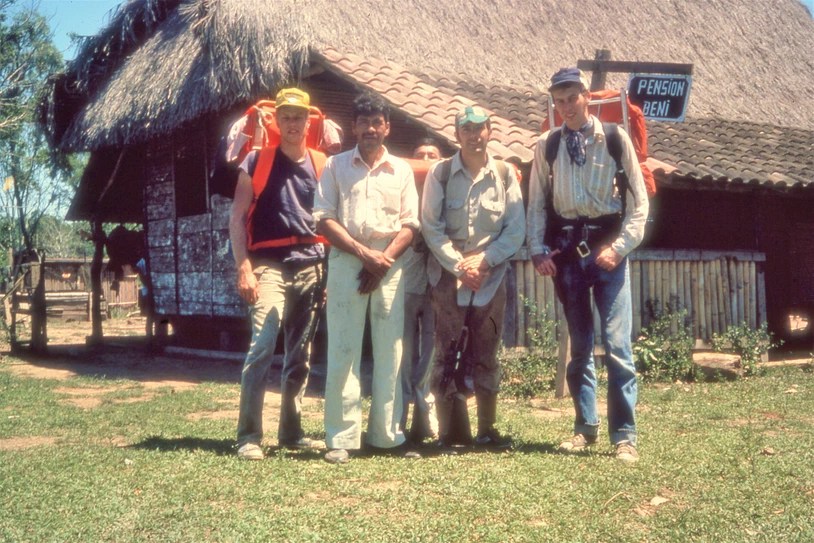
We went to Puerto Grether for none of those reasons. To us, it was a gateway into the jungle where we hoped to befriend a group of nomadic Indians. It was unsure how long the helicopter would be flying in Bolivia. We hoped it would be there every time we we needed it, but just in case, and until we could build an airstrip, that sleepy, depressed, tiny town would be our way in and out of the vastness of Green Hell.
This story was from the category Tales From Green Hell. If you would like to read more of my experiences in the jungles of Bolivia, please click on that link below.
More Writings by Phil
- Life Happens (31)
- Love Stories (4)
- Mission Related (1)
- Over-The-Hill In Europe (5)
- Stories of the Mbia (the People) (2)
- Tales From Green Hell 1978 -1979 (60)
- Theme Writing 1971 (2)
- This And That (26)
- Uncategorized (1)
 Writings By Phil
Leave a comment