
October 12, 1978
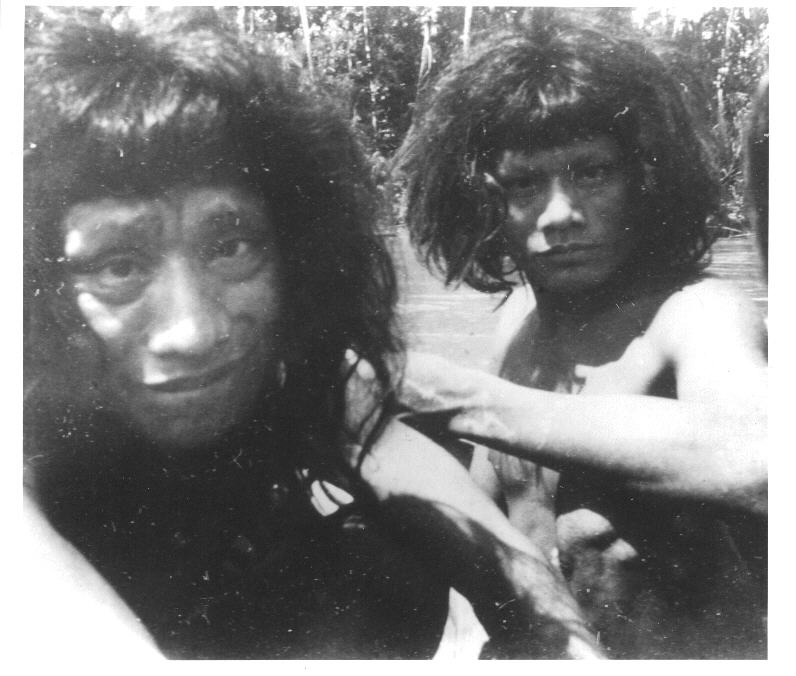
On the evening we arrived back at the Santa Cruz mission home, October 4th, a message was waiting for us. In very resent days, the nomadic Yuqui shot a Bolivian hunter. The man must have crossed the river and entered the area we just left. The message came from Don Miguel, proprietor of the Pension Beni in Puerto Grether. We had just left there a couple of days before. Miguel did not know about the the incident then, so it was recent news to all of us. We did not know how badly the man was wounded, only that he lived to tell about it.
According to the victim, the attack was unprovoked. He was just out hunting. He was probably shot from ambush and never saw the shooter. According to Alan, such unprovoked attacks happened years before when missionaries worked to earn the trust and friendship of the first group of Yuqui.
Alan said, “In the Yuqui culture, there are two classes of people: high class and slave class. When a high class person dies, someone else must be killed to accompany the spirit of the deceased. Usually it is a slave, one of their own group. However, if a Bolivian or other outsider is near at hand, that foreign spirit will do just fine for their purpose without killing one of their own.
He gave the example of Eracuyasi (Monica), recently widowed from Tibaquite. Alan shared that in the early days of interaction between missionary and the Yuqui of the first group, she had been married to Tibaquite’s brother, White Eyes.
He told me, “White Eyes was gunned down by Bolivians with machine guns. and his body hung in a tree. When the rest of the band found out, they were ready to kill Eracuyasi so that her spirit could accompany that of her husband’s. White Eyes was high class, his wife, slave class. Tibaquite said no. He was going to marry her, instead. Another was killed in her place and she became Tibaquite’s wife.”
We could only guess the Indian’s motives for this most recent shooting. We had not heard any rumors that Bolivians had killed one of the nomads. The attack could have happened just out of fear, with no cultural impetus involved. Sadly, the side possessing the element of surprise, Indian or National, would shoot to kill the other.
We flew back to our jungle outpost on the Rio Hediondo, yesterday. On the way we air dropped a letter to Miguel in Puerto Grether acknowledging we had received his message. Then we flew up the Rio Ichilo looking for two mango trees along the bank. The trees were a landmark of where Bolivians had seen signs the Indians back in February. We wanted to fly over the jungle behind them to see if the Indians could possibly come that way. If it was bad jungle and prone to flood, it was doubtful the whole group would pass that way. We also checked out the mouth of the Rio Vibora where it emptied into the larger Rio Ichilo. It was blocked by a log jam, but we thought that with a bit of cutting with a chainsaw, we could clear a way for our boat to pass.

In in the process of flying, following the bends of the river, our pilot, Brian Porterfield, flew the plane just over the water. On every curve of the river he would lay the plane over on its side so that the wing tips almost touched the water. First we we went one way and then the other as we flew upstream. My stomach was not liking the extemporaneous carnival ride!
One of the other passengers sitting in the back with me got sick and lost her breakfast. The reek of vomit filled the cabin, and only the strong hand of pride plugging my throat kept me from doing the same. My forehead broke out in beads of sweat. That was not from the heat and humidity creeping into the plane at low altitude as the pilot got ready to land the plane. I was really sick! I made it home, though. I should have just used a bag and gotten it over with while we were still in the air. I felt nauseated for the next three hours!
It was good to be back home. The river was warm. The tabanos, small biting flies. were ferocious, but its home! Borris my puppy had grown so much.
We met as a team last night. With all the logging activity in our area, it was doubtful the Indians would ever return. On our surveys, we had found them 100 miles to the south, close to the Rio Vibora and Puerto Grether. We decided to close our camp on the Rio Hediondo and make a new contact base somewhere down there. I felt rather sad at the thought of leaving a very fine camp. I didn’t like the heat and humidity out there, but the river, the green jungle, and the occasional white clouds in a blue sky were beautiful. We had producing bananas, papaya, pineapple, and citrus. So much, in fact, that we could not eat it all and much of it rotted on the ground, Those things I would miss!
We already called for flights to shuttle our things out to Cochabamba. My newly purchased kerosene refrigerator (used) and a bunch of other stuff was already scheduled for tomorrow.
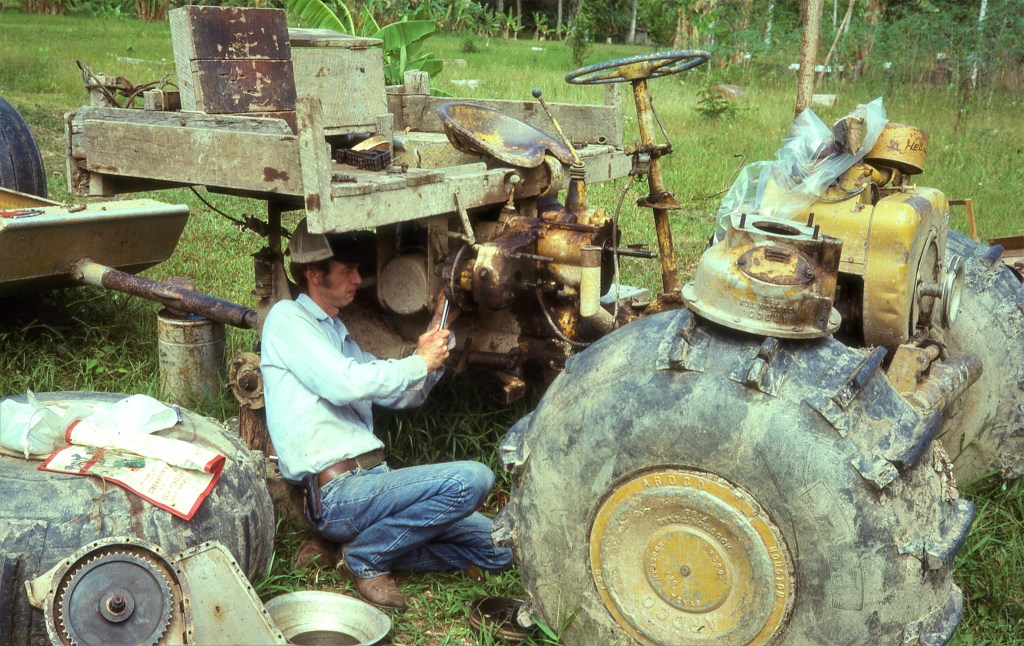
In anticipation of leaving I spent the day working on the swamp buggy. I made some progress, but mostly, I just got frustrated. It had been a long time since I had it apart. I could take it apart and put it back together without having nuts and bolt left over, but finding the problem was not always easy. If the culprit part was broken or disintegrating, that made diagnoses easy.
When we arrived in Cochabamba, back from our survey, there was another letter from Charlotte waiting for me. I tore it up! Our lives were not even in the same orbit. Her words told me one thing, her actions another. I had made my feelings clear to her numerus times since arriving in Bolivia. From this day forth, I felt it best not to acknowledge her letters, anymore.
More Tales From Green Hell
- https://fillburns.com/2025/04/24/english-spoken-here/
- https://fillburns.com/1978/02/09/hypothermia/
- https://fillburns.com/1978/04/08/that-chicken-got-ate-3-times/
- https://fillburns.com/1978/04/08/tibaquite-comes-to-visit/
 Writings By Phil
Leave a comment