
October 28, 1978

I got up early this morning because a light drizzle was soaking the canvas of my tent. Rain was leaking inside, and it was hard to sleep with drops of water splattering against my face. I knew I would dry out, eventually, but I was more worried about the effects of water on my journal and my dry, extra clothes. Other than a notebook filled with thoughts and events, I had very little else of value with me. I stuffed my paper and ink memories and clothes into my backpack for safe keeping, then unzipped the door. Crawling into the early dawn, I shouldered my pack and fled through the mizzle for the dry porch of the train workhouse.
If I was stuck in this town for many months, a place where no one spoke English, I could see it would give me a great push towards learning Spanish. I had only been in town for two days. Already, when I ate breakfast at the pension, I thought I did better in communicating with the lady who ran the place. Afterwards, I felt brave enough to wonder around town for a bit. Not many people were out and about, yet, so I did not get to practice my Spanish much.
The houses were kept neat. Some were made of adobe with tile roofs. Others were constructed of wood with corrugated tin on top. Some were nothing more than hovels. The yards of all were kept clean. These people must take pride in their town. The Catholic Church, of course was the crown of the town. It was made of brick and capped with a tile roof. It had a bell tower. The streets were dirt, but well maintained. There were few mud puddles around which I had to traverse. When I returned to the train yard, I took my dog, Boris, for a walk down the railroad tracks.
Later in the morning, I returned to the Pension and bought 15 Pesos worth of bread. I thought I would get fifteen pansitos like I got in Puerto Yapacani for that price. Instead, the lady gave me thirty! Oh well. Now, there would be plenty for both the dogs and me.
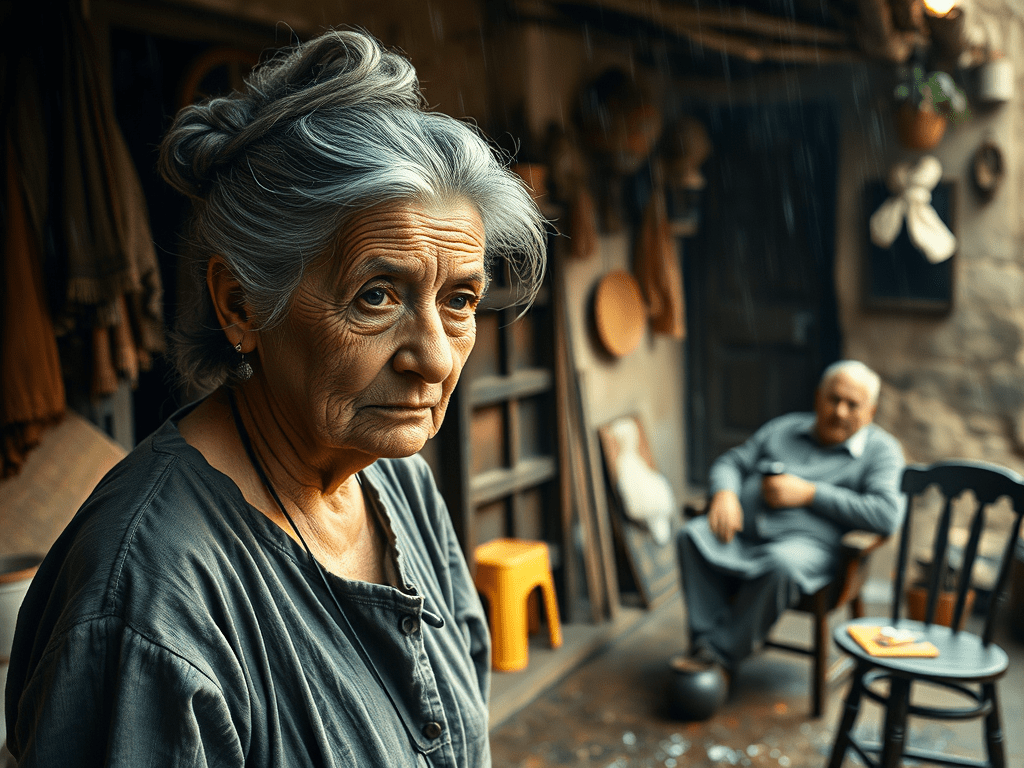
The old woman who ran the pension had a face that would get a portrait artist excited. Well, it would if the artist loved drawing pictures of elderly people. Her skin, especially her face was wrinkled into deep lines of bonze. Her long grey hair, sprinkled with a few surviving strands of black, was pulled back into a bun. She wore the same old grey dress on both days I had been in town. If she had ever had a youthful figure, it had all gone south decades before. Gravity had taken its toll! The cotton garment, at least around her middle, looked more like a sack filled with lumpy potatoes the staple of women’s fashion.
Her husband was a stocky man, pot bellied, and almost bald. He sat in a chair and watched everything that went on at their restaurant. Once in a while he would grunt loudly, or yell something, I wasn’t sure if he was trying to communicate with the cook in the kitchen or with some some other unseen identity. For the most part, his wife ignored these outbursts. When he talked, most of the time it was to no one in particular, he sounded like he had a mouth full of cotton. I knew my Spanish was lacking, but I had serious doubts that he was even speaking Spanish!
I thought the man was an invalid because every time I saw him, he sat in the same place, unmoving. I was wrong. Right before dusk, as I entered the pension, I saw him move. He moved with difficulty but with determined slowness he walked! He picked up his chair and kind of threw it in the direction he wanted to go, but never let it leave his hand. Then, using it for support he shuffled over to it. This, he repeated over and over until he got to where he wanted to go.
Every since I arrived in town, I had been trying to think of who the old man reminded me. He looked so familiar. It finally came to me. With his build, baldness, white shirt, and the way he grunted and talked like his tongue was swollen, he looked and sounded like Marlon Brando in his role as the Godfather. I hoped the old man would not put out a hit on me!
Their helper, perhaps he was their son, was very short. He seemed an odd fellow! There was something about his eyes, They seemed too big for his face. Looking into them, I felt like I was peering into his soul. They were like wishing wells filled with clear water. I could see the bottom, but there was not a single penny’s worth of thought for me to discern. He was empty! I found him a bit on the creepy side. When I came into the pension, he would stare at me. He did his chores: sweeping, clearing the tables, and such, but his haunted eyes locked onto me like a jet fighter’s radar locked on to an enemy plane. I could not escape his disquieting gape. I hoped there was nothing sinister in his behavior and attributed his lack of manners to never having seen a gringo before. He hardly ever said a word.

They had a new brood of newly hatched chicks and a new litter of kittens. One little orange ball of fuzz, very tiny, liked to chase the little chicks, much to the enjoyment of the old man.
Before I went to supper, I cooked some dog rice for the pups. Now there would be more bread for me. I was glad. There was something special about bread baked in a mud oven. I thought it was the best bread ever, especially when it was still hot!
Tonight, I ate at the pension, again. The menu was rice with a friend egg on top and a steak dipped in batter and fried. It was delicious! Of course, I ordered a whole bottle of soda with which I washed it all down.
I dreamed of CJ last night. She was older and prettier than I remembered her in real life. I wished I had forgotten the dream before waking. I did not want thoughts of her stirring my emotions all day, which they did!
October 29, 1978

It did not rain, but the wind blew strong all night. The gales kept tearing the plastic off my tent. Like a sailing ship with too much canvas unfurled, the fabric of my shelter snapped back and forth until it pulled all the stakes out of the ground. I got up a couple of times to put everything back in place. The dirt was so hard, that with the tools I had with me, I could only pound the stakes into the dirt about two inches. It was a futile exercise because it all came undone, again, in the next big blast of wind. I was glad the rain stayed away because my tent had basically collapsed on top of me!
The pension did not serve supper tonight. Instead I bought 10 Pesos of bread, a tin of sardines, a quarter kilo of cheese, and a soda. All totaled, it cost me 35.50 Pesos. Actually, it cost me a whole lot more. I gave the lady a 100 Peso note, She only gave me change of 14.50bs. Somewhere in the deal I lost 50 Pesos. Did she think I gave her a 50 Peso note? An honest mistake? I did not know. All denominations of Pesos were colored coded according to value so it is easy to tell a five from a ten and everything else all the way up to the biggest bill. Maybe she was trying to take advantage of a gringo with a poor grasp of Spanish. Whatever! I let her get away with it.
My Bolivian friend came into the pension about the time I was leaving. He called me, “Mister.” He asked me to have a cup of coffee with him. I tried to tell him, no, that I was full of soda. He misunderstood my words and sign language and ordered a soda to share with me. It beat having to drink another cup of coffee! He asked me if I liked whiskey and expounded on that subject for a while. He said he could drink and drink and drink, but was not a drunkard. It was not my favorite thing to talk about, but at least he did not start talking about women!
October 30, 1978
I had sardine sandwiches for breakfast. I thought I would eat some meals at my tent and save some money! I liked sardines but had to admit that, for breakfast, some sweetbread and tea from the old lady at the pension would have been better.
The days had become routine. I got up each morning, did nothing till noon, ate, then did nothing till I went to supper at the pension. I wished I had a good book to read or drawing paper and a pencil. I needed something to fill the long lonely hours of waiting.
I talked to a man who seemed to be in the know about train schedules. If I understood right, the train might come today. If it did, it would let passengers off and unload some cargo, then travel on to Puerto Yapacani. He could not tell me how long it would stay there or when it would return here.
Obviously, on that first night, when they told me the train would return in the morning to get me and take me to Santa Cruz, “mañana” did not mean “in the morning” or “tomorrow.” I was still playing the waiting game! Already, I had been marooned for four days! I felt abandoned!
 Writings By Phil
Leave a comment