

Rio Chore August 1979
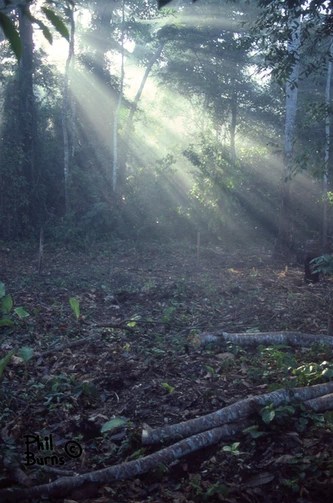
DAWN STEALS SOFTLY into the jungle. Only birds are boisterous at this hour, and all seem to commence the day in a frenzy of loud gossip. A light fog hangs over the Rio Chore, the ghost of the fleeing gloom. I am cold, yet reluctant to leave what little warmth my poncho offers. The ground is hard, and still l linger. Leaves, pregnant with dew, give up their wards of the night, and silver droplets rain down on a grateful earth . I hear our two Yuqui guides stirring up the fire. It is time to get up!
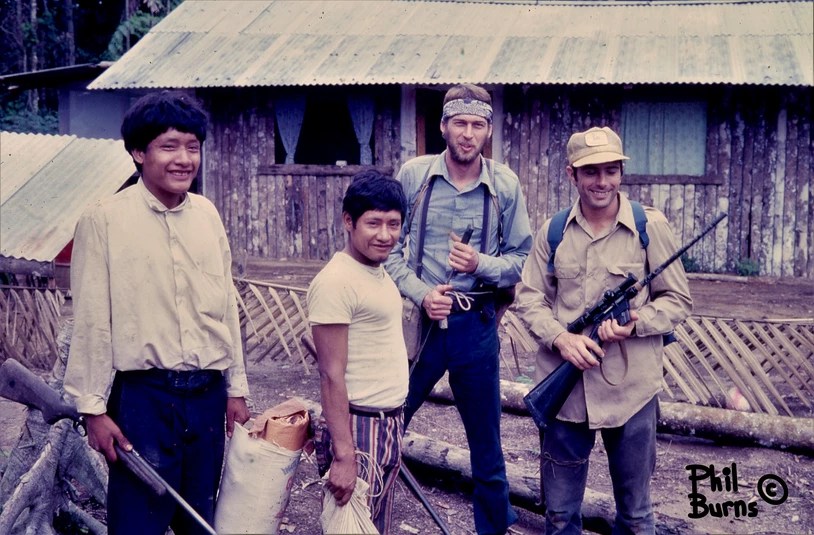
We down a cup of rice seasoned with bouillon for breakfast, then stuff our sleeping gear into frugal packs. No field packs this trip! We carry only the barest accouterments of survival-I didn’t even bring an extra change of clothing, although I’ve questioned my sanity since. With the Indians along it hasn’t been a problem to supplement our meager supplies of rice and granola, that is, if you like monkey!
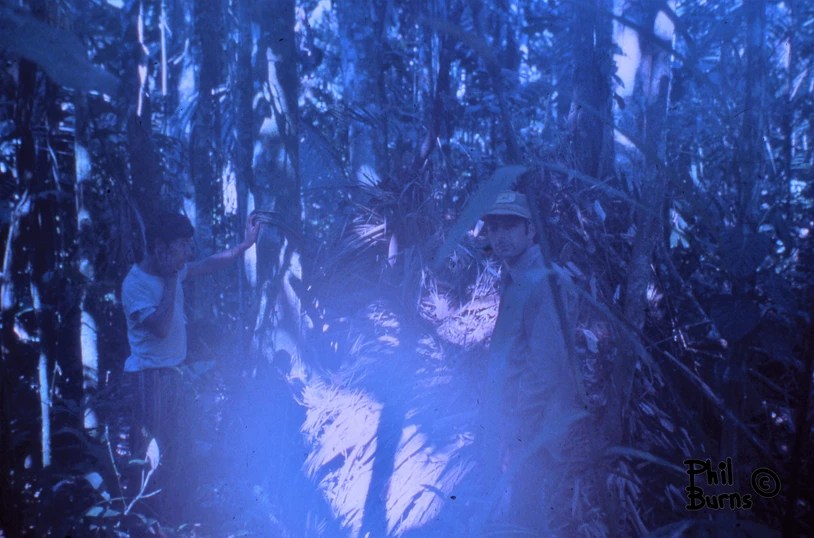
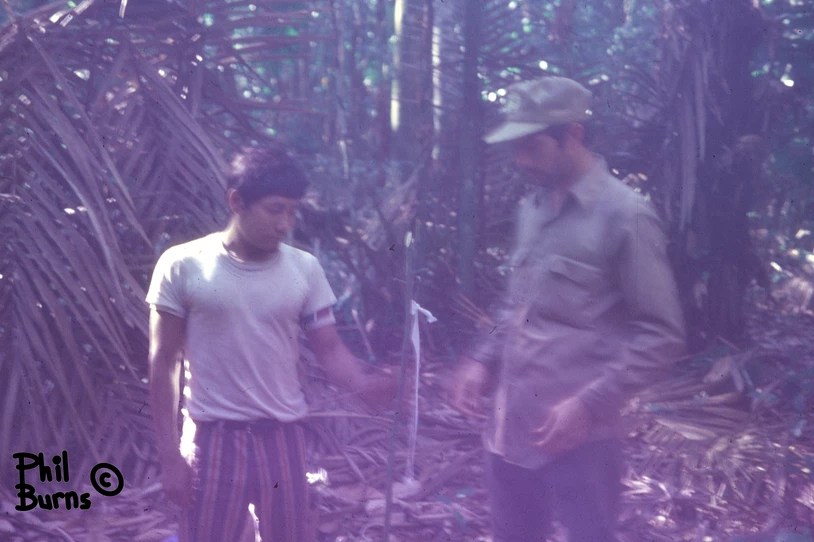
We break camp and head upriver following the trail of the people we are looking for. Quichiguaru reads leaves. To me, that is all they are: leaves, and nothing more, but to him they are the chronicles of the forest. He tells Alan the details which are then interpreted for me: pigs crossed here, a tapir urinated there, but more important, “the people went this way. We retrace our steps to the Indian camp we found yesterday. There is an abundance of evidence that the nomads frequent this area. Their footprints perforate the mud of the trail. Honey cuts and other trees, felled so that the fruit could be picked, lie in various stages of decay along our path. Baskets of woven palm leaves rot on the ground, and tin cans, gotten from who knows where, rust in the weeds.
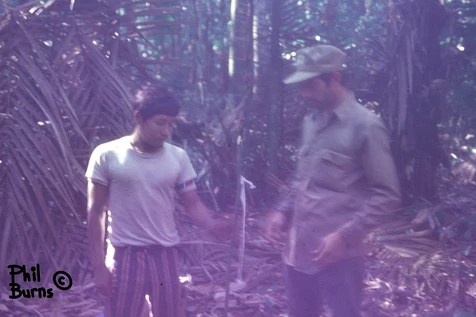
Quichiguaru leads down a new path, and soon we enter a large camp. It is of a recent vintage. The charred remains of five or six fires dot the open space, and around the whole encampment runs a fence-like affair of fading palm fronds. We hang gifts and white streamers in the faith that the Indians will soon return. A few hundred meters further on, we amble into a camp that is perhaps 3 years old. Quichiguaru tells us a baby was born here. Curiosity makes me ask how he knows. Alan translates his answer: Because of the small palm enclosure.

The trail does not leave this camp, but we continue on and ramble down a belt of high jungle. It is headed toward home, and sooner or later it should run across our gift trail. Then, just like following the path, we stumble onto a hut-like structure between two trees. We found one yesterday, and Leonardo had explained that when somebody dies they put the body in a basket on a platform and cover it with palm. It looks like a dilapidated A-frame. When the flesh has decomposed, they bundle the bones and carry them with them. The huts may still contain bones, for Yuqui culture desires that someone else be killed to accompany the spirit of the departed. Usually, the one chosen is a slave, and slaves do not get their bones carried. Alan asked what the place was called, but Quichiguaru replied, “I won’t tell you, because if you ever mention it to ‘the people, it will ruin your relationship with them.” He tells us again not to talk about it to “the people,” or to cut vines around it. This one is probably for a child because the platform is small.
We are home. In the last 3 days I have lived a compendium of life as lived by the wandering Yuqui. I have walked their trails. I have sat by fires like theirs and eaten food like they eat. I have swatted mosquitoes and pulled ticks from my body. In my imagination I have followed the kismet of their lives from the trauma of their birth to the agony of the grave (especially tor a slave). They are a people who eke out an existence as a wild beast would, a people who live in constant fear of nationals, and who are fettered with superstitions. What joy is there? What hope can there be, unless we find them and present Jesus unto them?
End
More Pictures And Commentary
55 views
 Writings By Phil
Leave a comment