
February 1986
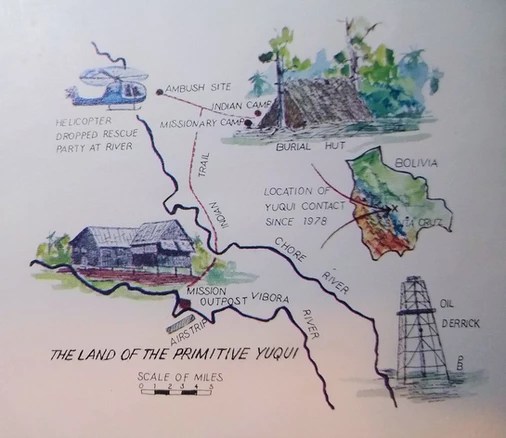
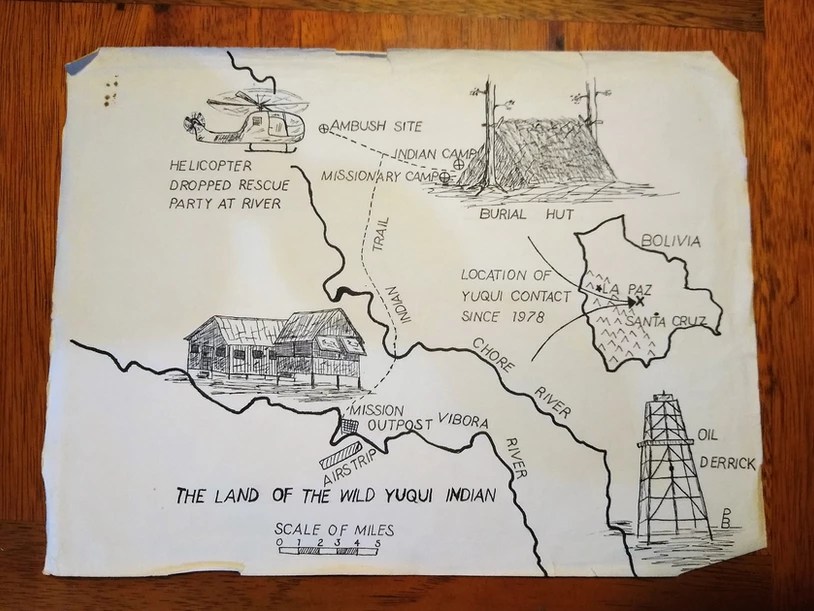
It was late afternoon. The terrified gasp of a woman alerted the missionaries that the Yuqui Indian’s camp was nearby. Early the day before, Alan Foster, Steve Parker, and Felix Ovales had left their mission outpost on the Vibora River to follow the nomadic group. They had left their families and the camp in the care of their co-workers, the Larry Depues and the Bernie Armacosts.
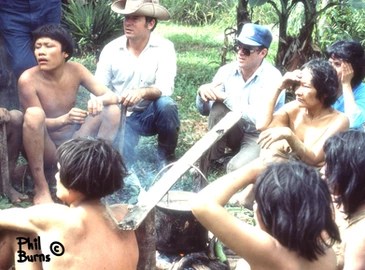
Alan called out, in the Indians’ language, “It is us! It is us!” They hoped their lives were of value to the potentially savage tribesmen because of the friendship they had cultivated in over 60 previous contacts and because of the gifts that they had given to them. It was their hope to bring the group back with them to their base at the Vibora. The forest dwellers began to emerge from the shadows. Some smiled. They had left their eight foot long bows and arrows behind.
Although the men could see the smoke from the Indians’ fires a short distance down the trail, they were not welcomed there. They had to make camp where they were standing. The night passed uneventfully.
At first light, the Indians came wanting to go fishing. The missionaries agreed. Steve removed the radio from his pack so that they could call their wives from the beach. When the Indians said it was not far and that they would not be long, the missionaries decided to leave the radio and call when they returned.
They had hardly set foot on the trail when the Indians changed their minds. Fishing was not a good idea! Instead, they wanted to hunt monkey, but a short while later when they encountered a troop of the lanky creatures, the Indians showed little enthusiasm. They were moody. The missionaries watched the situation worsen and, at last, decided to turn back to camp on the pretense of calling their wives.
The Indians insisted on walking behind them. Steve had been watching them out of the corner of his eye, thinking they might have mischief in mind. Finally, tired of this he prayed, “Lord, I’m going to trust you with my back.”
Only minutes later, the Indians attacked. An arrow sliced into Steve’s back, knocking him down. A second arrow struck Felix in the shoulder, but striking the bone, fell out. Alan flung himself to the ground and was firing his rifle hoping to frighten the attackers. Looking up, he saw Potbelly*, his bow drawn, trying to take aim at Felix who was still running for cover. He put two rounds near the savage. The arrow missed.
The sound of the rifle filled the Indians with terror. Screaming, they fled into the trees. In their haste to leave the area, two of them dropped their bows. Alan broke the arrows and one of the bows in pieces, as a Yuqui would do to show his strong anger.
To quiet their hearts, the men prayed. Then, Alan started down the trail to get the radio, but his knees were shaking so badly that he could not continue. They prayed again, and the Lord gave him the necessary strength. When he arrived at the campsite, he found that the Indians had stolen Steve’s pack and some other gear. The Lord, in His goodness, had preserved the radio and the medical kit. Alan called into the radio mike, “Emergency! Emergency!”
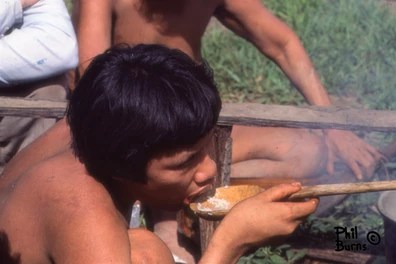
While a rescue craft was being sought, Steve lay in pain. Later in the morning, the sound of the helicopter landing on the river beach over a mile away gave Steve the false hope of being rescued before noon. What he did not know was that he would have to spend a miserable night in the jungle before the rescue party reached him. The jungle close to the river was such a tangled mass that it would take the ground party one and a half hours to hack out only 150 yards of trail.
The arrow point had passed into Steve’s body, making every breath a struggle. At one point during the morning, he felt that death was imminent, but despite his pain, he was overwhelmed with the joy of knowing that his sins were forgiven and that he was going to meet the Lord. He was ready to go. He wondered what would happen to his wife, Vangie, and their six children.
The hard time passed. Steve was breathing easier. It was decided that Alan should go to the river and help the rescue party. Taking only his rifle, he started out in the early afternoon. He soon found himself in a vast dry swamp with vegetation so thick that he had to crawl through it on his hands and knees. The heat was unbearable; his body was sapped of water. Time after time he collapsed. At last, completely exhausted, he climbed under a fallen tree to pass the night. Only a short distance away, the ground party with the aid of a flashlight continued to cut trail until 9:30 p.m.
Throughout the day and into the night, Steve found himself enrolled in the school of faith. When he had asked God to keep his back he had meant, “Don’t let it get hurt.” Now he had a broken arrow shaft protruding from it. Was God still the Keeper of his back?
Another big problem was that Steve was dehydrated. His throat was dry and sticking together which triggered an uncontrollable desire to heave. They had no water, but they could hear rain falling around them. He prayed that God would direct some of the drops through the hole in the canopy of leaves above him. He opened his mouth and stuck out his tongue. He waited. Nothing happened! Had God failed him?
Felix, though wounded, found some relief for Steve by crawling around on his hands and knees with a flashlight looking for moisture retained in the leaves of the forest floor. It was a tedious task, but one little droplet would open Steve’s throat for about an hour. Several times through the night, Steve asked Felix to pray, and God heard those prayers.
At 7:30 a.m. the rescue party arrived. Alan was with them. Immediately, a medic gave Steve an IV. The fluid restored him. Rather than carry Steve to the river the men asked that chain saws be airdropped so that they could clear an area in which the helicopter could land.

While they waited, Alan and three members of the rescue team walked back to the campsite to retrieve the gear not stolen by the Indians. They looked at the Indian camp and the surrounding area. What they found was startling!
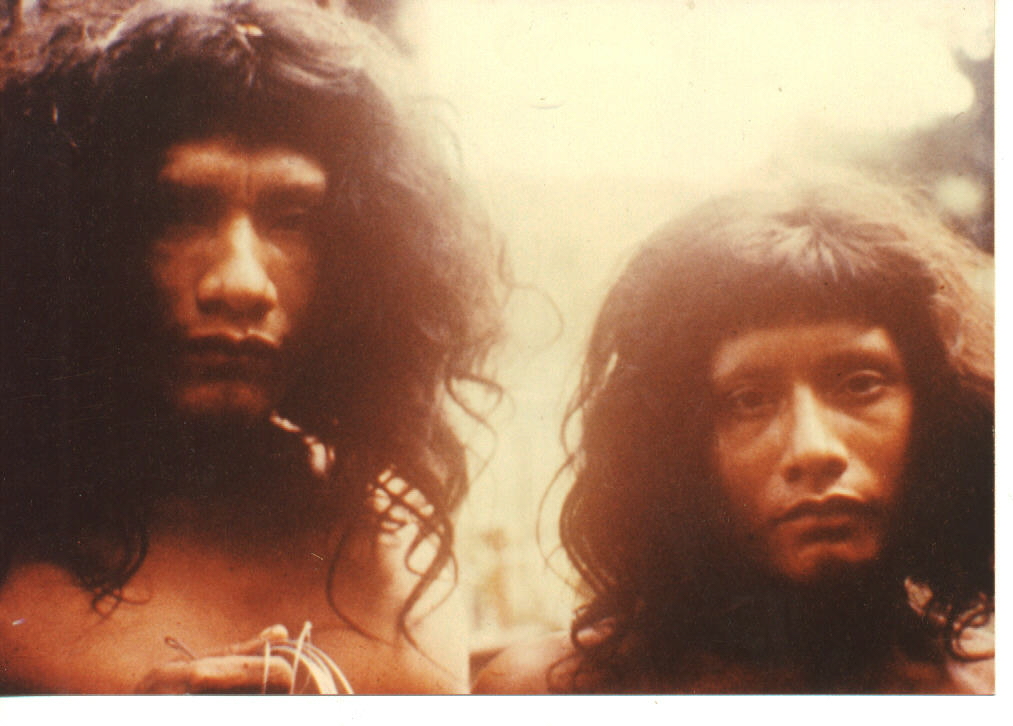
The Yuqui do not bury their dead. Instead, they wrap the bodies in woven palm-leaf baskets and place them on a raised pole platform inside a palm-leaf shelter. When the flesh has decayed from the bones, they are “renewed” by being placed in a new basket and new shelter. Later the bones of an important person may be painted with a red coloring agent and carried along in the nomadic travels of the tribe. They believe the spirits of the dead influence their lives in many ways, even causing death.
The most important way in which they appease the spirits of the dead is by choosing other individuals to be killed to accompany the departed. This is also a form of self-protection so that the dead do not do the choosing.
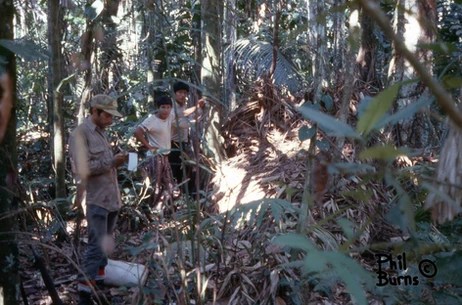
The missionaries had made camp right next to two such shelters. The area around them was littered with smashed kettles and broken bottles. The Indians had sacrificed these treasures to show their sorrows to the dead. Beside the Indian camp they found a new clearing. Poles had been tied into place to build new shelters. The Indians had been in the process of “renewing the bones.”
In trying to kill the missionaries, the Indians were not rejecting them nor the Gospel message. Instead, they were trying to satisfy the lust of an ancient Satanic belief that says that the spirits of their dead need other spirits to accompany them to the next life. Recently, the tribal chief and other prominent men were killed by loggers; therefore, the slaying of the missionaries would have fulfilled their desire to appease the spirits of the dead.
After the men returned to the wounded, the saws arrived, but it took several hours to make a clearing large enough for the helicopter to land, Finally, Steve and Felix were loaded into the hovering craft. As it lifted through the treetops the rotor struck a large branch. It was only the Lord that kept it airborne.
Steve was in surgery for three hours. Afterwards, the doctors agreed that it was impossible to drive that arrow point through Steve’s body and not hit an artery or vital organ. All they could say was, “It’s a miracle.”
Felix, not seriously wounded, soon returned to the Vibora River and the contact effort. Steve was in the hospital for 18 days. He had many opportunities to share the Gospel with doctors, nurses, his roommates, and others.
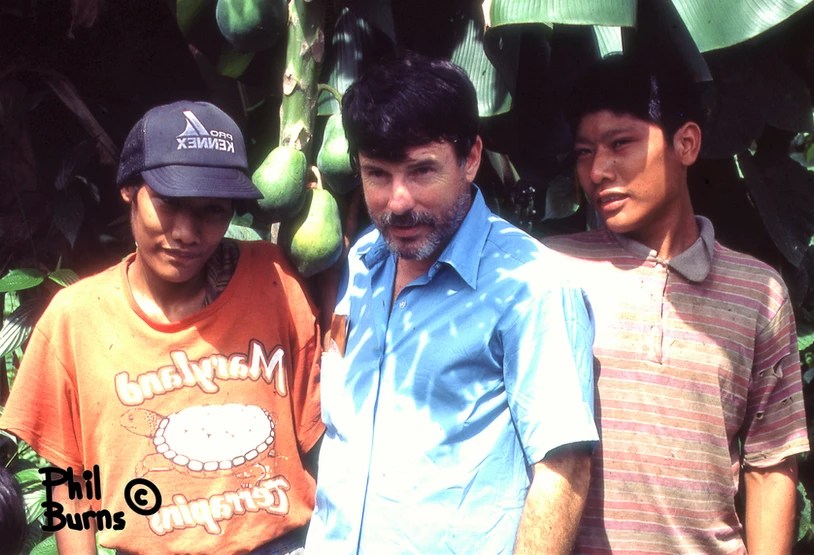
Although the experience caused him a lot of pain, Steve is thankful for all the Lord taught him through it. He knows now that God was the Keeper of his back even in the midst of pain and suffering. He is thankful for the lesson in faith, too. He admits that if God had sent rain through the hole in the trees, his faith would have been misdirected toward a visible experience rather than toward the invisible, all-powerful God who was watching over him and who knew just how much he could stand.
To kill and be killed is a way of life to the wild Yuqui. Probably, the next time they appear at the Vibora base they will act as if nothing happened.
Old Testament stories, preparing them to hear the Gospel have been told. Would you pray that God would use these stories to enlighten their darkened hearts? Also, pray that God would protect the missionaries as they continue the contact effort, dealing with these unpredictable, savage Yuqui people.
Phil Burns
Printed in The Bolivian Field Paper
March 1986, Number 121



We cooked a big pot of rice with a whole chicken thrown in to keep them around longer while it cooked. Alan Foster was the only “gringo” that could speak the Yuqui language, but the rest of us helped out where ever we could, putting sugar into bags, and getting other gifts ready for the group when they were ready to leave. They were given lots of plantains (cooking bananas) and 3 piglets to go. They disappeared into the jungle, happy and fed and the missionaries were sure they would be back soon. It was only after months had passed with no sign of the nomads that it was decided to send a team in with the promise that the missionaries still wanted to be their friends and that there was lots of food back at the mission outpost. By the time the shooting happened, Jackie and I were deep into a year of Spanish study. We never got to return to our home on the River Vibora, other than to collect our things.

.

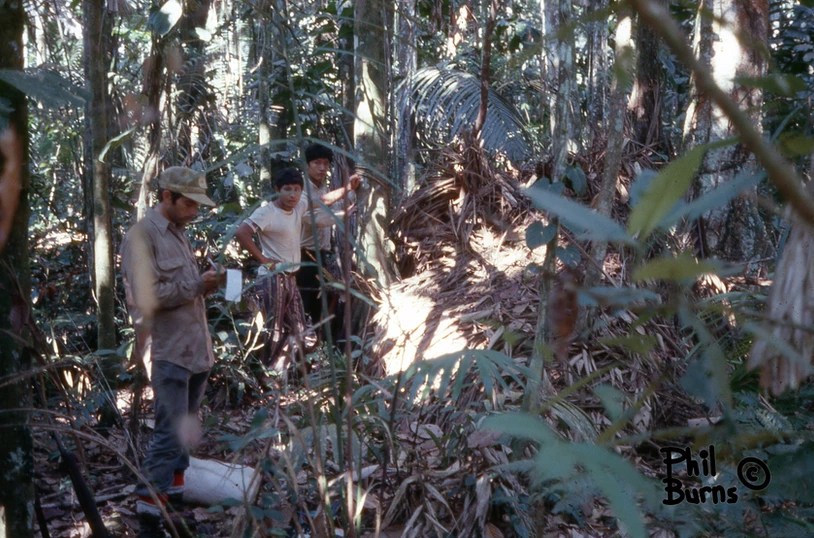
* Names in quote marks were nicknames given to the people on earlier contacts by the missionaries.
Thirty-six years ago when I wrote this story I used the word “savage” to describe the Indians that shot the missionaries. It is a word that many, especially in “woke” circles, find offensive today.
I will say that there are savages in every culture. The Nazis were savages in their treatment of Jews in the 1930 and 1940s, Americans committed savagery at Wounded Knee in South Dakota in 1890 and later in the My Lai Massacre in Vietnam in 1968, and probably many times in between. Many in the civilized world, today, are savages in their bloodlust to poison, dismember and kill the unborn.
The Bolivians, who ambushed the Yuqui, killing at least eleven of them, were savages. That treachery was the catalyst that caused the Indians to shoot their “friends.”
Brutality begets brutality! Because of sin, there is a savage in all of us.
It is part of who we are! Our world view can sometimes keep the monster locked up, but not always. Everyday, the news is filled with the civilized acting uncivilized towards their fellow man. But for the grace of God, there go us all!
Gina Apr 13, 2022
Growing up in NTM, I’ve heard this story several times but always enjoy reading it again. There are aspects other than the use of the word savage that many disagree with, whether “woke” or not. It’s good to read these stories and focus on the importance of spreading the Gospel rather than being concerned with the view that says “leave them alone and don’t push your beliefs on them.” Thanks for sharing.
Ted Apr 13, 2022
Another very interesting story! I appreciate the reminder that “there is a savage in all of us”. We “Christians” often tend to forget that important fact.
 Writings By Phil
Leave a comment