
July 20, 1978
Alan Foster asked me to accompany him as he shuttled two Bolivians down river in our boat. A logging company sent the men in to cut up any fallen trees blocking the river passage and clear log jams from mouth of the Hediondo River where it dumped into the bigger Yapacani River. We relied on loggers for information about the nomadic Yuqui, so we obliged them and gave them a ride downstream in our boat.
The logging concession would soon send a boatload of fuel up the river. Our passengers were instructed to make sure it got to its destination without delay. Once it arrived at our camp, it would be picked up by truck or tractor and transported to their base of operation. It would be used in chainsaws, trucks, and heavy equipment once logging efforts started anew.
The rainy season, seemingly, had ended and soon the jungle would be crawling with loggers. The sound of axes and machetes, the roar of chainsaws, and the rumble of tractors and skidders would fill the air from can see to can’t see. If the hunter gatherers we sought to befriend were in the area, all that activity would scare them off to safer surroundings, or worse, cause a deadly confrontation between logger and forest dweller.
Alan ran the outboard and I sat in the front of the boat with a shotgun. If we encountered game, I was to shoot it. I saw a large duck, took aim and pulled the trigger. I missed it, even with a shotgun! No supper for me!
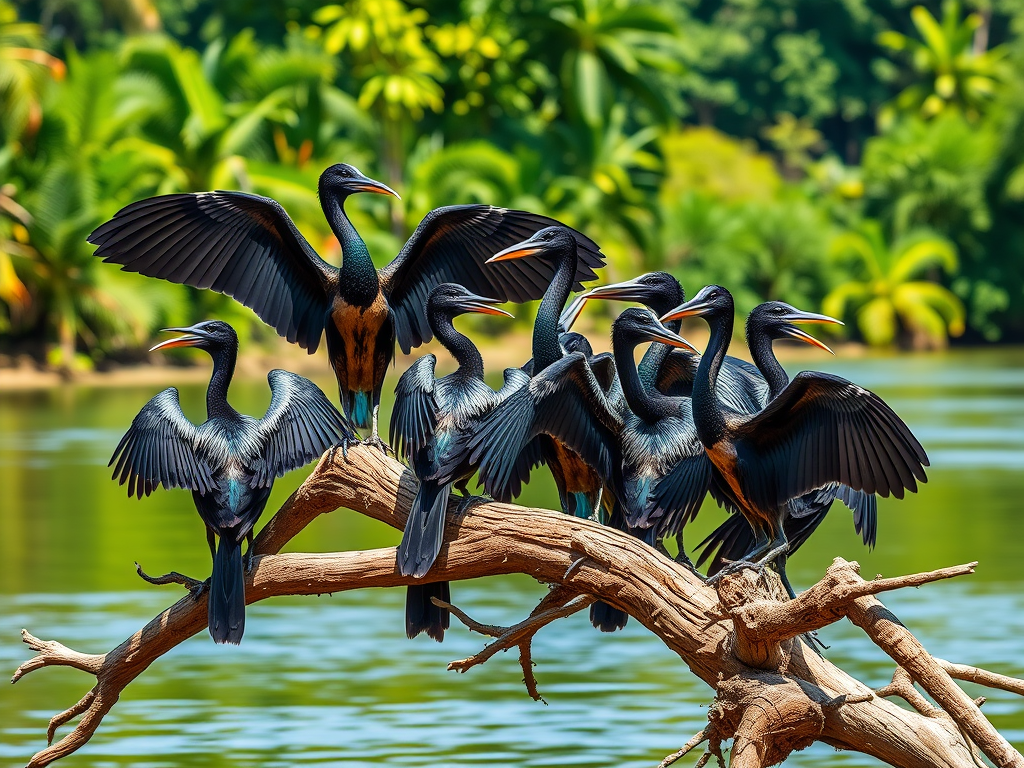
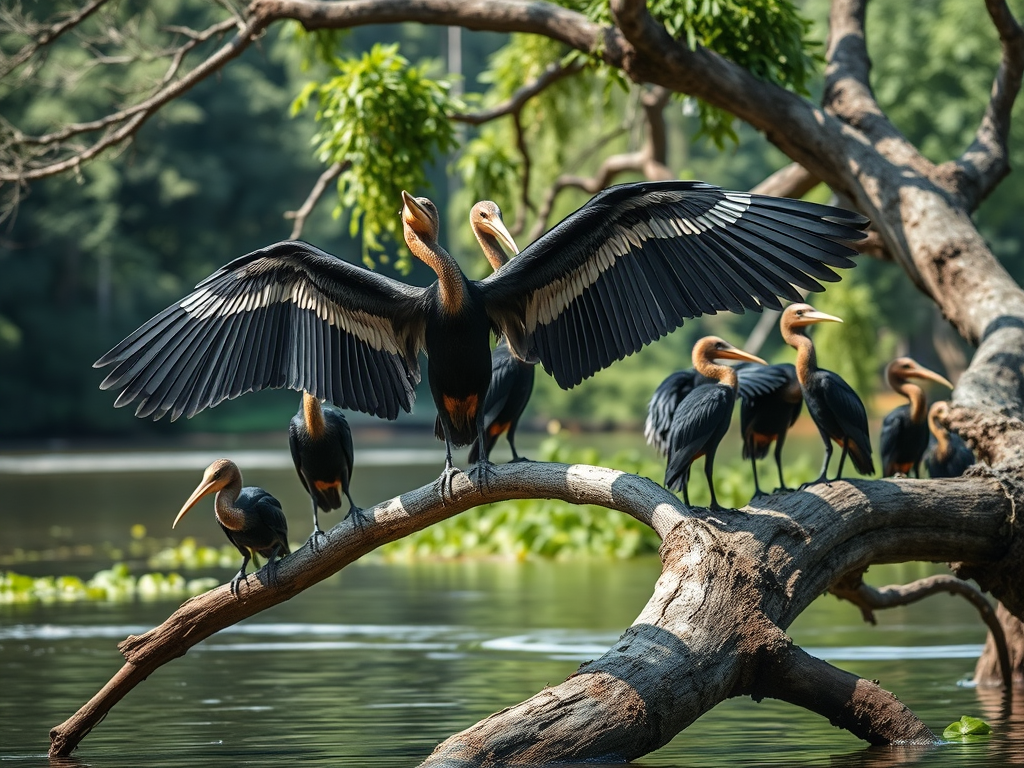
As we motored around a bend in the river, we came upon quite a sight. About sixty Snakebirds clamored for footing on the crowded branches of a fallen tree in the river. The birds held their sodden wings in full open position, long black flight feathers hung, like socks on a clothesline, to dry in the sun. I wished I brought my camera!
Anhinga birds got the name Snakebird because their long curving neck was the only part of them exposed when they swam. Their whole body was submerged so they looked like a snake with raised head swimming towards you across the water. Their feathers were not waterproof like those of most waterfowl. That was why their body sank below the surface. Like a stealth submarine, they stalked their prey. When they got within range, they used their sharp beak to spear fish, the main staple of their diet. They had webbed feet that aided in swimming. Anhinga birds were monogamous and formed a strong bond with their mates, a relationship lasting a lifetime.
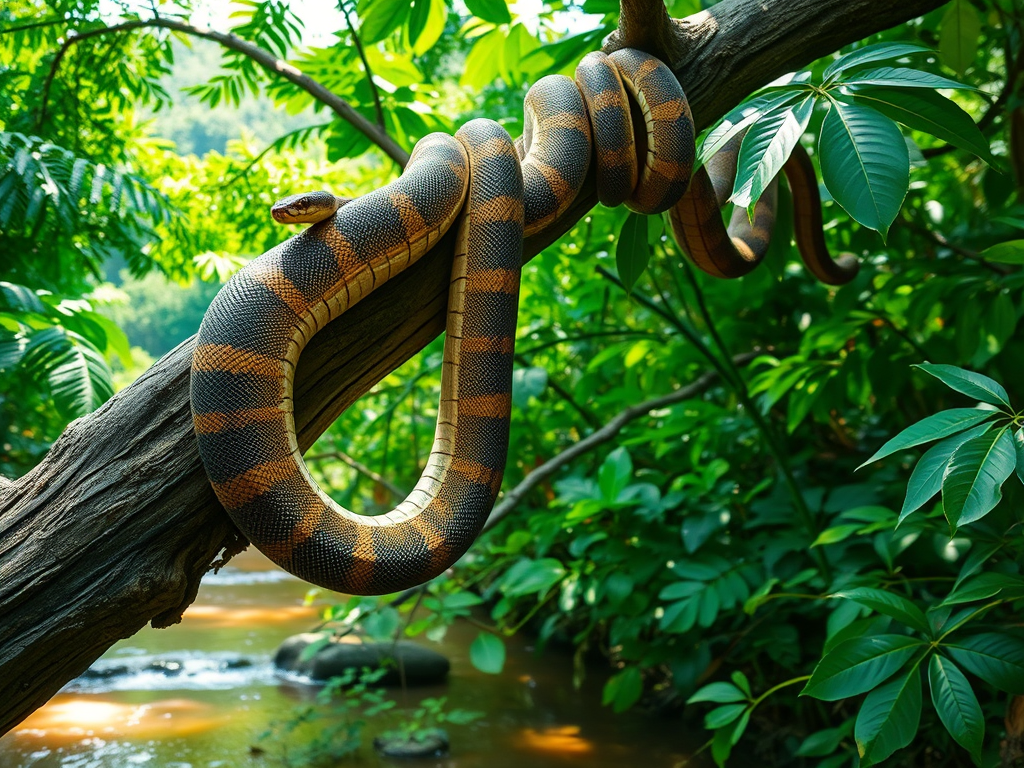
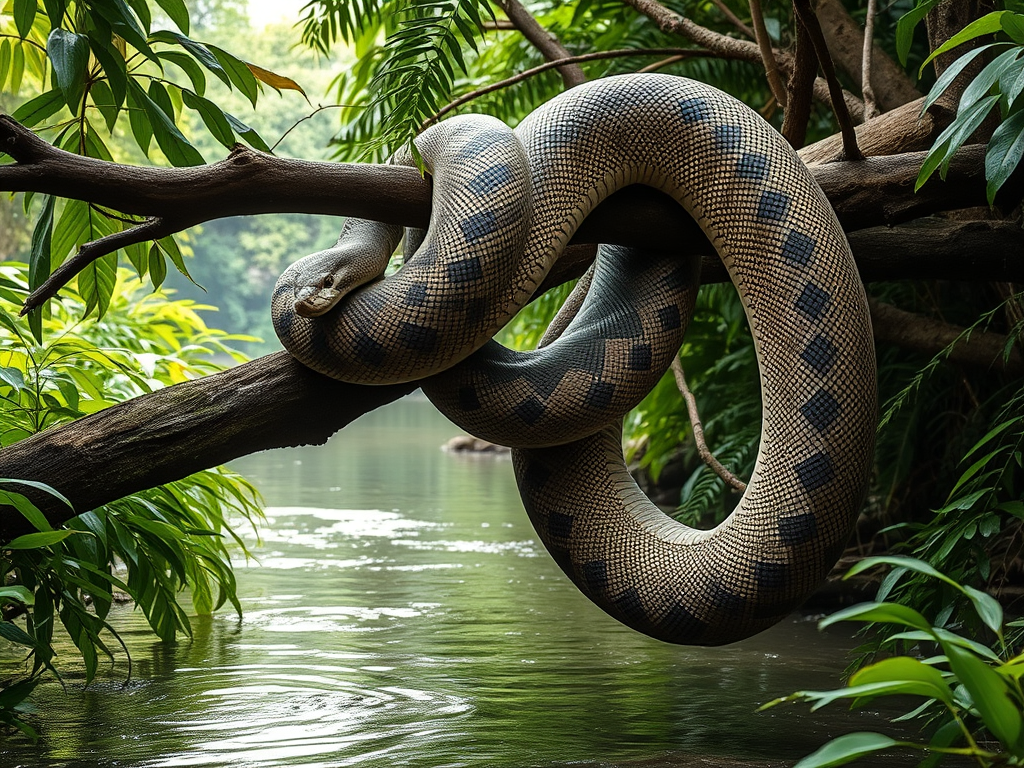
Near the mouth of the river, the waters of the Rio Hediondo backed up into the surrounding jungle. There was a big pool of swamp-looking water off to our left. In the middle of it was a fallen tree with branches stretched heavenward as if beseeching a greater power to pull the tree from its watery grave. Spread across the naked limbs were loops of what looked to me like innertubes. Alan said it was probably an anaconda. Again, I wished I had my camera. Then again, I was content to stay in the main channel of the river and put distance between us and the biggest snake I had ever seen!
Anacondas were big snakes, no doubt! They could grow 30 or more feet in lenght. Some scientist refused to award it the record for being the longest snake. However, no one would argue over whether or not it was the heaviest snake. Anacondas could grow to 12″ thick and weigh 550 pounds. They could kill and swallow even the biggest jungle animals. I had heard stories of people being killed and swallowed by anacondas. I believed they could, but one article I read said there was not any documented cases of snakes eating humans. However, there were people who reported having close encounters with the snakes, too close for comfort, and they reported the snakes had hellacious halitosis. Anacondas do not lay eggs. Instead they give birth to 30 or more baby snakes. Yikes. It was best that we kept going!
A newly fallen tree blocked the passage right before we reached the Yapacani, the big river. It went all the way across the smaller Rio Hediondo. The water was swift and I messed up my paddling and we ended up broadsiding the tree instead of lining up on a low spot where the tree trunk dipped under water. The current pushed us into the foliage where we got tangled in the branches. We used the tree limbs to pull our way back to the river bank for a another try. Our second try we made it across.
I switched places with the Bolivian who would do the cutting. Alan turned the boat around using the outboard motor to hold us in position against the current. The man started the big Stihl chainsaw and began cutting the branches out of the way. Next, he attacked the trunk. At times he cut with the bar under water and the chain, like a big pump, spewed water high into the air behind him.
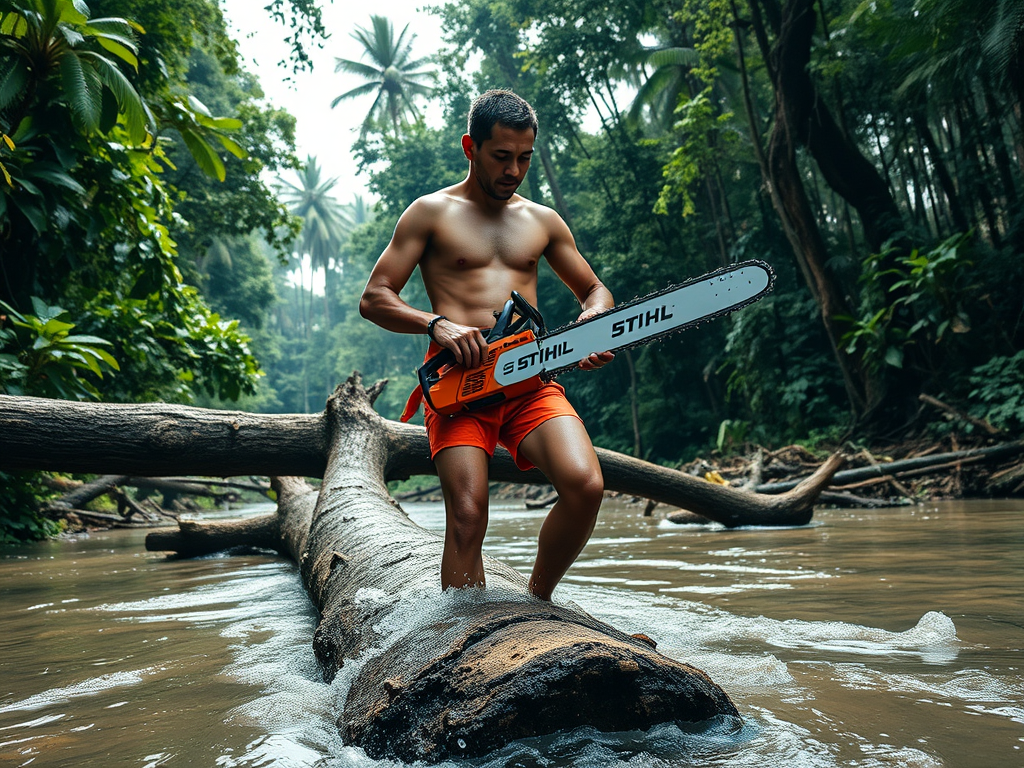
He stopped cutting and to my surprise stripped down to his underwear. He wore a fancy pair of undershorts, in stark contrast to his dirty, tattered and torn outer clothes. Thus unattired, he stepped out of the boat and stood on the tree trunk and began cutting. I knew the saw was heavy and he was extending himself, reaching far out in front of him, to make the needed cuts. I was afraid he was going to fall and loose the saw in the river, or worse, butcher himself with the sharp spinning chain. The task was especially dangerous when he was undercutting the trunk and the kerf started to close on the bar and stop the chain. Thankfully, his brief display ended when the top of the tree broke loose and floated into the Yapacani. The logger put his clothes back on and we were soon on the way back up river.
As soon as we got away from the mouth of the Hediondo and were back in smooth, slow moving water, Alan let me take the tiller and run the outboard. I had never done that before and hoped I would not crash and drown everybody. He rode shotgun in the front, probably hoping to shoot the duck that I missed on the way down!
All and all, I really enjoyed the days excursion. I only wished I had a wife or girlfriend back at camp with whom to share the days events. Instead, it would be just another entry in my uncaring, unemotional journal. Sorry you weren’t there, CJ!
This story was from the category Tales From Green Hell. If you would like to read more of my experiences in the jungles of Bolivia, please click on that link below.
More Writings by Phil
- Life Happens (31)
- Love Stories (4)
- Mission Related (1)
- Over-The-Hill In Europe (5)
- Stories of the Mbia (the People) (2)
- Tales From Green Hell 1978 -1979 (60)
- Theme Writing 1971 (2)
- This And That (26)
- Uncategorized (1)
 Writings By Phil
Leave a comment