
October 25, 1978
I went to the Pension this morning for breakfast. I ordered hot, sweet tea and pancitos, little bread. “Bread of the day” had not yet popped out of the mud oven, and yesterday’s crusts had turned tough after exposure to high humidity for 24 hours. I enjoyed the bread, anyway, by dunking it in my tea and eating it soggy.
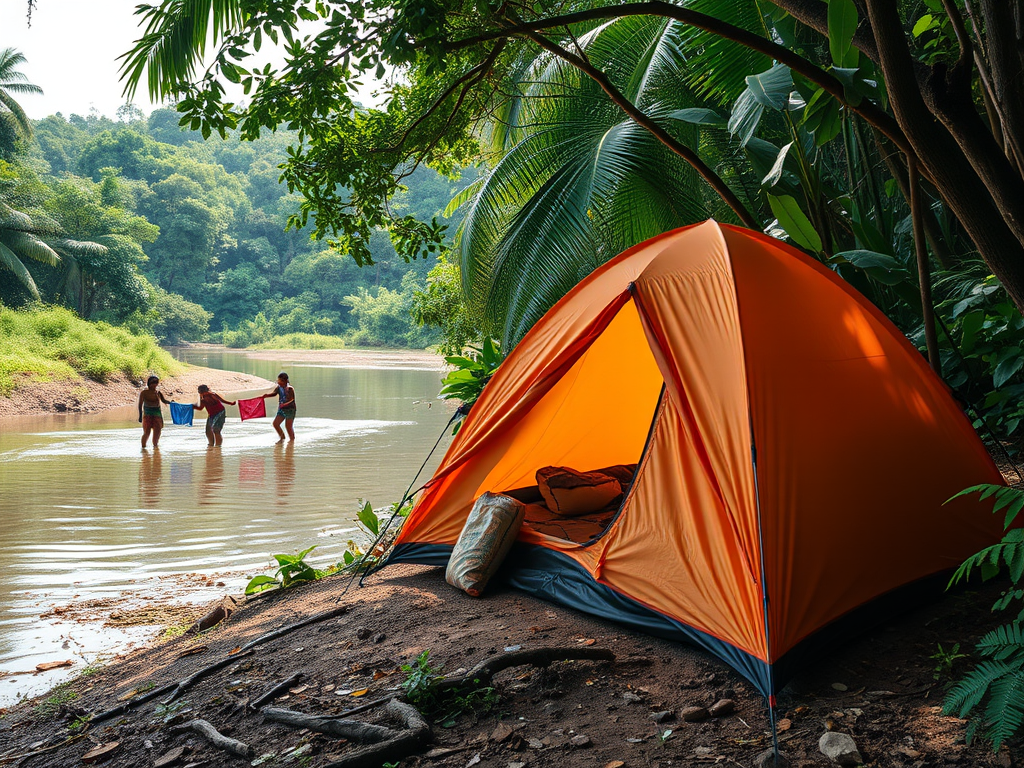
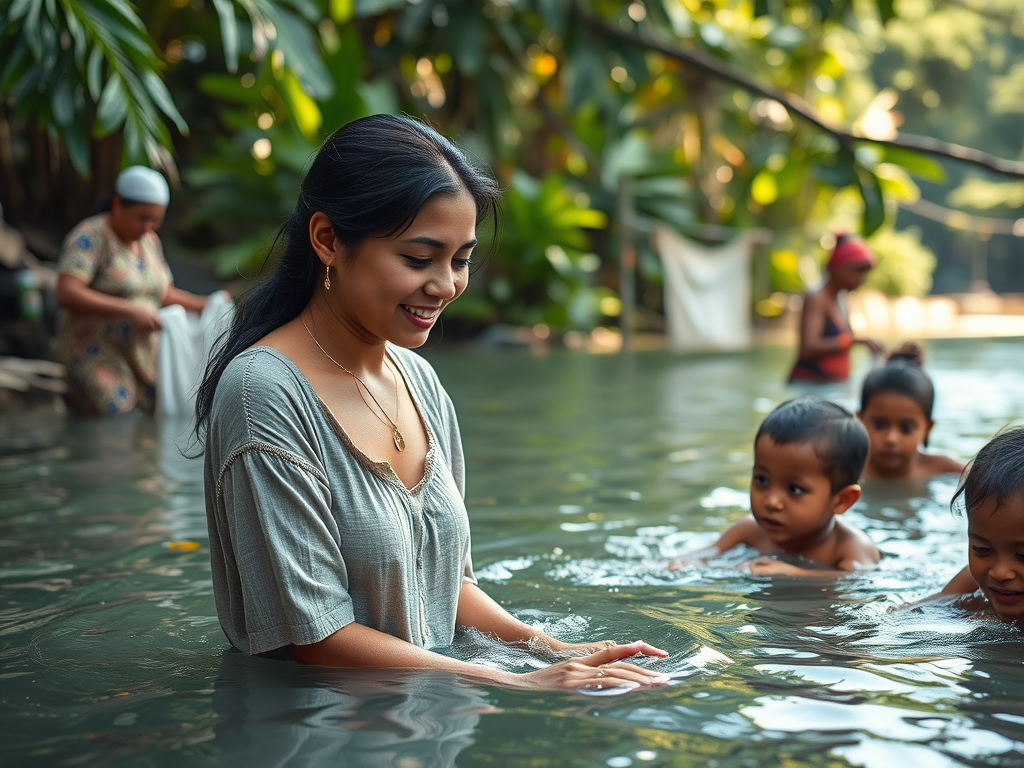
When I got back to my tent, I saw there were a number of women already out in the river doing their laundry. Children played in the shallow water closer to shore. A pretty teen, I guessed she was 16 -18 years old, was watching the younger ones.
After lunch at the Pension, I returned to my tent. Women were still washing clothes. It looked to me that, for the most part, they were the same ones that did their laundry earlier in the day. They must have had lots of clothes or their family got dirty easily so they spent most of their waking hours at the river scrubbing clothes. More likely, I guessed the river was the place to socially connect with other women, catch the latest gossip, and feel some relief from the relentless heat. No wonder they stayed there most of the day!
In almost waist deep water, an older woman, very much overweight, was rubbing a bar of green laundry soap into a blouse. When the material was all soapy, she put the brick of soap into a big shallow basket held by a friend, and continued to scrub the blouse back and forth in her hands. There were no rocks in the jungles of Central Bolivia where one could soap a garment and beat it clean on a rock. When she finished the blouse, she wrung it out with her hands and threw it into the basket. From a second pile in the basket she pulled another item of dirty clothing and the effort was repeated.
The girl was there, still watching the younger children. She held a toddler on her hip. She wore ragged blue cutoffs. I surmised that she was the eldest daughter of the fat woman. I had heard the women yelling instructions to the teen, something about the little ones. Even from a distance, it was easy to see the girl was fit and trim, probably in the best shape she would ever be in her life. Hopefully, she was still years away from catching the obesity that engulfed her mother!
Before supper time, I was back in our camp by the river. The girl was still there, but freed from childcare responsibilities. At first, only her head was above water, then she stood and dove, again, into the purling spate. When her head reappeared, she stood to do it over and over. No wonder! Like a mermaid, she lived in the water, at least during daylight hours.
Watching her frolic in the current, made me forget the stifling heat and humidity of the place, at least momentarily. Instead, my mind was fraught with visions of a paradise filled with innocence. The brown river water looked cleaner, the formidable jungle more friendly. That delusion was quickly dismantled by two teenage boys who splashed into the river and chased the girl. Innocence fled before them, paradise was lost, pounded into the sandy bottom to drown by their stomping feet!
That moment was a reality check. It was hot and humid, again. I felt sorry for the girl. A place like Puerto Yapacani was a sure dead-end road for the hopes and dreams of a young woman. There was little chance for advancement, better education, or claiming a better position in life. Poverty would enslave her and close off all escape. The days of watching her siblings in the shallows or of carefree cavorting in the river would end. Then, at best, she would become her mother!
A while later, I was sitting on the ground outside my tent by the path that came up from the river. My dog, Boris, sat beside me. The air was too still and hot inside my tent and I hoped to catch a bit of breeze outside. Inside, I would have no headroom, either. Outside, the nearest thing above me was a star I could not see in daylight. I would never bump my head on that, even at night! Besides, I was waiting for Matt and Paul to return from whatever was occupying their free-time in this town so we could all go to supper.

The young woman waded ashore. She picked up a basket of washed laundry, balanced it on her head, and climbed the steep riverbank, steadying her load with one hand. She stopped to talk, asking about the dog. As best as I could, I told her his name was Boris. She asked me about other things, too, but I was at a loss, both in understanding her and replying to her with my limited Spanish. Her clothes were wet and dripping from her recent swim. Her skin glistened and river water still clung to her body like raindrops clinging to a bronze statue of a pretty maiden.
October 26, 1978
We went to the railway office this morning. There, we made arrangements to send our swamp buggy to Santa Cruz on the train. We were told it would go out when a train engine returned to this side of the river. Of course, we could ride with it. One might arrive later today, or next week, or . . .! In the interim, we just had to wait.
Early in the afternoon, we loaded our swamp tractor and trailer onto a flatcar. It was lashed down and made ready for the train ride to Santa Cruz. Now, all that was needed was an engine to pull it there. The waiting began!
I found the frontier town interesting. There was little to do except watch the people going about their lives. I wished I could speak Spanish so I could listen to their stories of how they ended up in the jungle at the end of the rail line.
I had sent my heavy Bible out to Cochabamba with the rest of our stuff so I only had a New Testament with me. I read that. I brought no other books with which to pass the time. Remember, this was suppose have been only a two or three day trip! I wrote in my journal, but could not do that all day, so I watched people.
Someone pointed out the town doctor to me. He was a young man, and definitely not in the peasant class of people with most other rural, lowland Bolivians. His skin was lighter in color than most in town, and his facial features less indigenous, more European looking. His forehead gave a strong hint of future baldness. People with Spanish or European blood in their veins often considered themselves in a higher class than most of their countrymen. I would not say that was the case with the doctor. He seemed well received by all he encountered on the muddy trails through town, at least when I was watching.
Probably because of his status, he had gotten into medical school. The government helped pay his tuition, and upon graduation, he was required to work at a clinic in some podunk town like Puerto Yapacani for a number to years to pay off his debt.

I saw the doctor many times around town or walking on the trail to the river. Usually, he was accompanied by a woman. He seemed to be twitterpated, maybe so preoccupied with her beauty he was neglecting his duties. Then, maybe not, nobody died in town in the days I was there. Maybe walking around town with his girlfriend was his way of making his rounds to check on all his patients. I did not know what his girlfriend’s responsibilities were in that remote settlement, but she definitely looked out of place, living on the edge of the world!
We ate all our meals at the pension. The food was good, even if the rice had a few cooked weevils in it. More protein for the body, I guessed! There was not a lot of variety offered on the menu. It was more like the plate of the day type thing. The daily fair varied little: One day rice, the next macaroni, one day fried yuca, the next boiled yuca, and so on. I liked it when a fried egg came on top of the rice. Some kind of meat always came with the meal. All of it was from the jungle. Sometimes it was fresh, sometimes not. They had no refrigeration so when an abundance of meat could be had, it was heavily salted and dried. I guess it could be compared to jerky, but it was not something I wanted to snack on. It made whatever dish it was put into way too salty for my taste. I was always super thirsty when I ate it.
Lunch and supper cost 15 Pesos, less than three dollars. A pitcher of Refresco, like Kool-Aid is 5 Pesos.
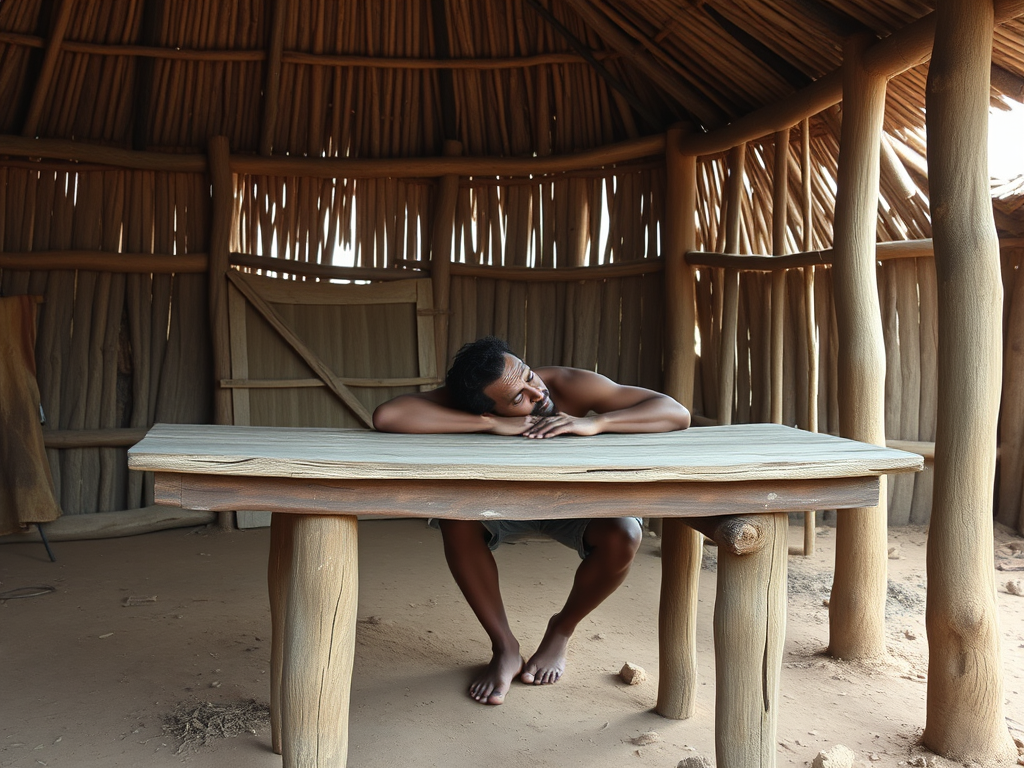
While we were there, payday came for the loggers and railroad workers who were still in town. With the money they earned, a number of the men bought alcohol and were soon drunk.
When we ate our noon meal, one man was passed out in his chair, his upper body sprawled out across the table. His head was at an awkward angle, looking almost like his neck was broken. When we returned for supper, he was still there, but was no longer in the chair. Apparently, it was needed for another customer so his body had been dumped on the dirt floor. A “near dead” body crumpled on the floor did not make for great dining atmosphere even when the joint was but a humble thatched roofed, bamboo walled restaurant! He was still there when we left for the night. I guessed he would stumble home later when the inklings of soberness forced him to his feet in the dark of night. What a life! What an embarrassment to self and family!
More Tales From Green Hell
- https://fillburns.com/1978/10/24/not-the-riviera/
- https://fillburns.com/1978/10/21/ditching-the-ditch/
- https://fillburns.com/1978/09/08/we-found-indians/
- https://fillburns.com/1978/05/01/i-hate-sewing-bees/
 Writings By Phil
Leave a comment