
October 19, 1978
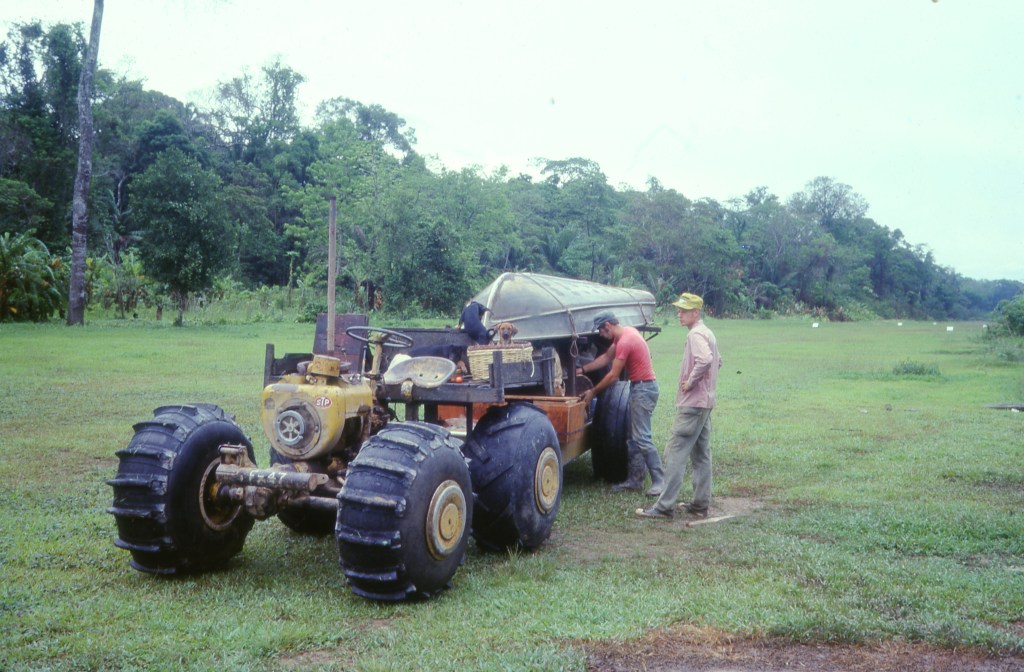
The rest of our stuff had been safely shuttled to the nearby airstrip. It was probably already on a truck on its way to Cochabamba. Paul and I were going out by land and were not so lucky. The swamp tractor refused to start. I began working on it at at six in the morning. By seven o’clock radio time, I was so frustrated. I wanted to cuss, push the buggy into the river and commit suicide, and not necessarily in that order. I knew God was not pleased with my attitude. Worse, I knew giving into my flesh and doing one or all of them would not improve my situation. I felt a responsibility to get this thing done because people were counting on me.
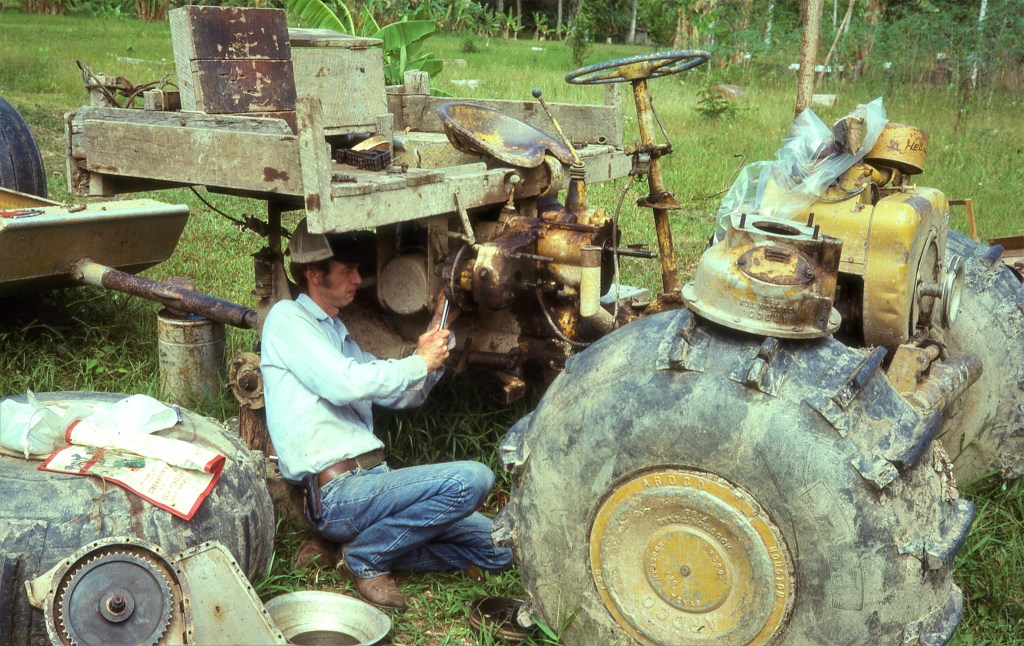
I was not a mechanic. I could usually take something apart and put it back together without a hardware store full of bolts left over! My coworkers put me in charge of the buggy for that reason. My knowledge was limited to the very obvious! Often, I did not know what normal looked like so I missed the cognoscible signs of wear! Now, I was frustrated!
I asked Paul, our radioman, to ask Brian, our pilot, to fly Matt or Alan back to Rio Hediondo. I really needed someone to be miserable with. I hoped whoever came would bring some new ideas, too. Matt was the one that returned. I was happy to share my woes, brought on by a stubborn tractor, with him.
Working together, we found the swamp buggy would not start because the rotor cap was full of moisture. The points were wet! Had I followed the obvious, I would have saved myself hours of frustration. The missing spark should have led me straight to the rotor and points to check for problems there. However, the swamp buggy had set out in the elements for weeks on end. We fitted a small tomato paste can over the vertical exhaust pipe to keep the rain out of the manifold. That was all the protection we gave it. Still, the engine always started with just a couple pulls on the rope. What changed? I did not know why the moisture built up there, now. I felt a bit foolish for not checking that first, especially when it was so simple a fix.
That the tractor would not go into gear was a much more serious problem. We found one of the clutch plates had pulled loose from its rivets. Perhaps it was still attached when I opened the bell housing a few days before. I didn’t notice. Maybe I should have at least seen that the plates were worn out, but I did not. Loose rivets were an obvious sign of trouble that I had no problem diagnosing!
We should have already been on our way to Santa Cruz. Maybe we were foolish, but we decided to try to make the buggy work with broken and worn-out parts. Waiting for replacements parts could take days before the mission buyer found them and sent them to us. We were without food supplies. I had already gone three days without a real meal.
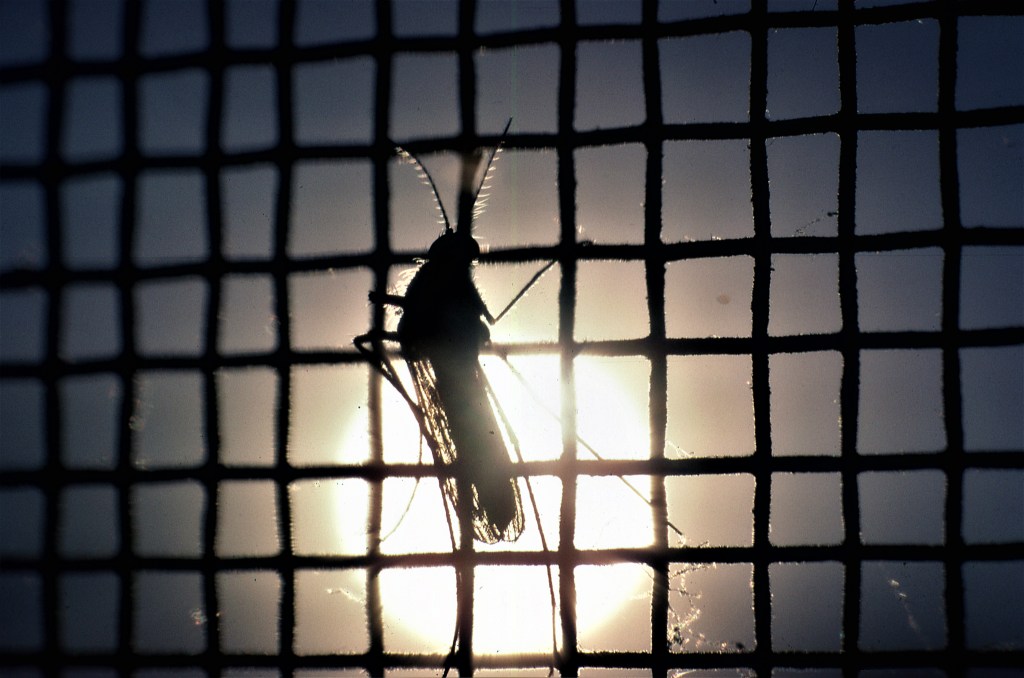
Nights were long. Sleep was short! My sleeping bag was way too hot to crawl into at night. My mattress had gone out on the airplane to the nearby airstrip and was now on its way to Cochabama. Sleeping on the boards that use to support the mattress made my body ache before morning. Talk about hardwood! If that was not enough deterrent to slumber, my mosquito net was also on the truck. I was too lazy to unpack my tent from my stuff on the buggy trailer. I reasoned it was only for one more night. I was tough! Buzzing mosquitoes droning all night in my ears and sucking my blood begged to declare otherwise. By dawn’s light, I felt like an anemic wimp in a mosquito factory!
October 20
True to form, we awoke to rain. When the weather cleared, Matt and I started working on the buggy. We decided to leave out the clutch plate that had pulled loose from its rivets and run metal against metal. If it worked, we would be on our way. If it didn’t, it wouldn’t matter as everything in there was shot and needed replacing. We finally found a combination that gripped and made the tractor go forward. We hooked the trailer to the hitch, gave the Rio Hediondo one last look, and drove into the jungle. It was almost noon.
Just being on our way lifted my spirit. I felt hope, even a ting of excitement as the trees of the jungle closed in around us. I would not say that I was soaring high, but at least my feet were off the ground. I soon learned that it did not take much to drag me back to earth. Little things made me crash and burn in the mire of despair.
On our little road out of our base, we got stuck in the mud. We hooked the winch cable around a tree on the far side. Soon the swamp tractor was pulled from the mire and back onto decent road. That little area of muck reminded me of the big swamp coming shortly, once we hit the logging road. With the poor shape the buggy was in, I dreaded driving through that slough. Last time we went that way, the road was covered with water. We had to navigate a great distance over unseen deep ruts carved by the wheels of tractors and logging trucks. My worry was for naught! When we arrived, the swamp was dry. It was easy to see the ruts and steer those cleated tires to better road on the high ground.
We reached good road and I hoped it would be that way all the way to the Rio Yapacani. It was then that I noticed my sleeping bag was gone. I set out a brisk pace to retrieve it. It had to be just around the bend, right?. I reached the swamp and still did not see it. Then, I started down the little road to our now abandoned base. I was almost back to the airstrip when I spied the bright orange cover that held the sleeping bag. One of those evil trees had reached out and snagged it, pulling it from the trailer. I picked it up and hurried to catch the others. It took me forty-five minutes of fast walking to find it and return to the buggy! I was not a happy camper!
A short while later, the clutch on the buggy was slipping badly. We were crawling down the road at a sloth’s pace, even in first gear. It was good road, high and dry! What would we do if we came to a swamp that wasn’t dry? I was sure that if we were in a covered wagon pulled by oxen that we would make better time.
We decided to put the clutch plate, the one pulled from its rivets, back in place. If need be, we would start the tractor in gear. Everything we did was a desperate experiment with no guaranteed results. This one worked, at least for a while. We put it in high gear and made good time until we came to the river.
The loggers had built the bridge by pushing trees into the channel until it was full. The water would flow between the trunks. Then they piled dirt on top and packed it down. When finished, their trucks and tractors drove over the river without problem. Such construction posed a big problem to us. That was because after the last big rain, the river flooded, washing all the dirt away. We did not have heavy equipment to push more dirt on top. There was no way for us to drive across those crisscrossed logs!
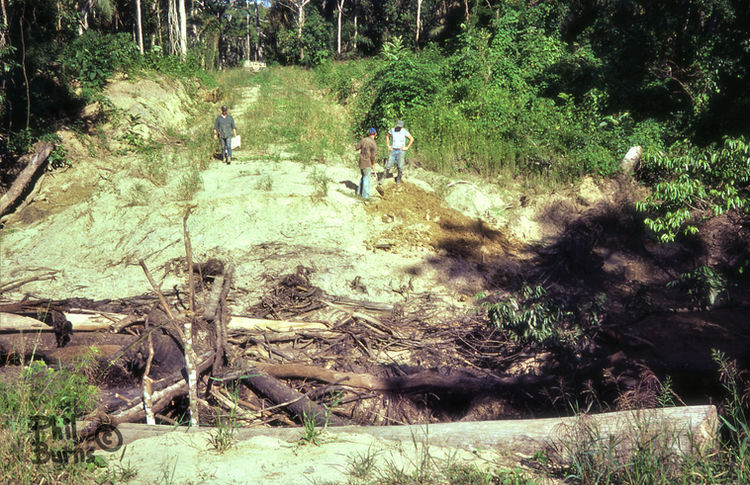
Though water flowed through the logs, they still impeded the current. The river was backed up on the upstream side of the bridge like water behind a damn. There was quite a torrent coming out the downriver side of the bridge. It was there we decided to float the tractor across.
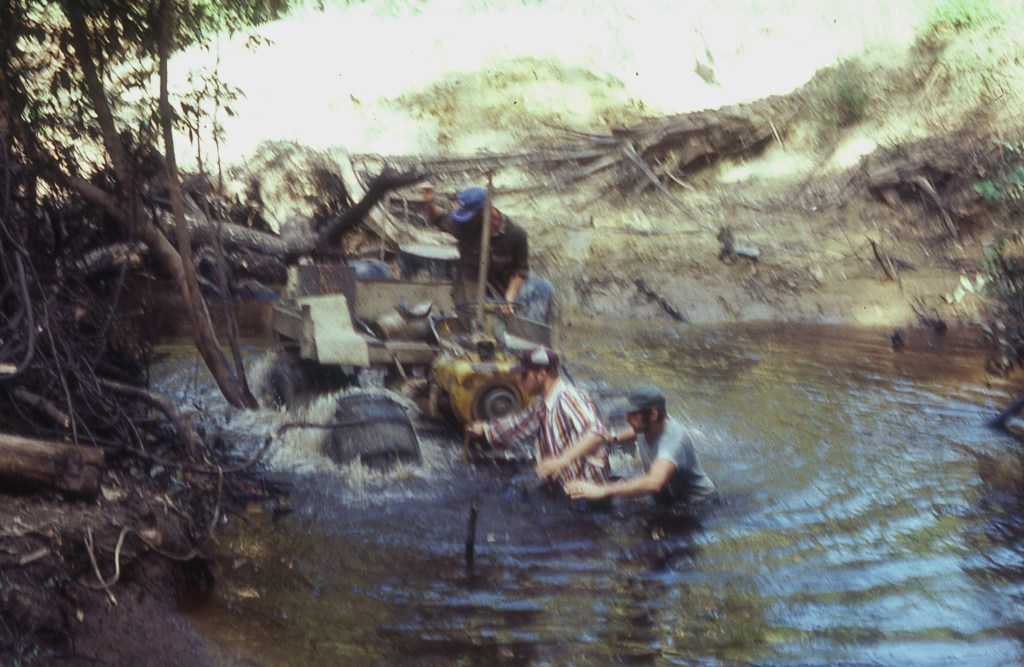
The swamp tractor possessed four DC-3 airplane tires. Those gave it enough buoyancy to float the tractor and driver across a stream. The trailer had two airplane tires on it and the box was sealed like a boat. It would float even when loaded with considerable cargo weight. We pulled the winch cable out all the way. On the far side of the river, we wrapped it around a tree. With much effort, with both the winch and us pulling, we floated the buggy across. Then we pushed the trailer into the channel and pulled it across with the winch.
We hoped to run all night, all the way to the Yapacani if the road remained drivable. It did not, so we made camp for the night. I shared a tent with Matt because he only brought the bare necessities when he returned. To escape the mosquitoes, I crawled into the tent early. There, I chomped down raisins and peanuts for supper, and wrote in my journal by candlelight.
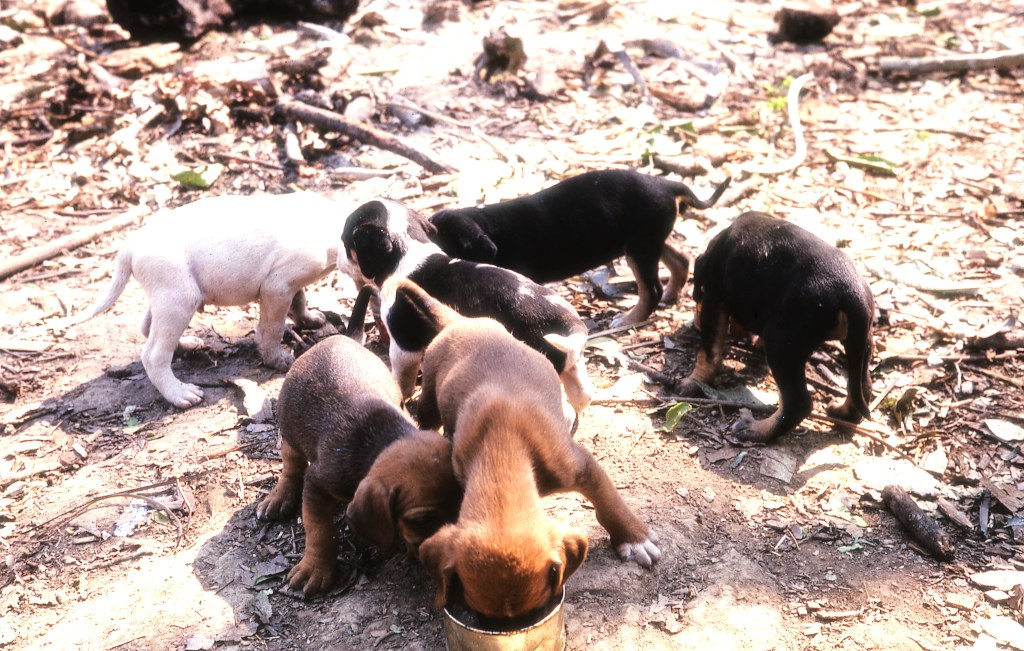
We had three puppies with us. I had planned to take my dog, Boris, with me. I named him after Boris Badenov of Rocky and Bullwinkle fame. The other two puppies I forgot to put on the last flight out to Cochabamba. They were two more unwanted responsibilities on an already grueling trip. Their redeeming characteristic was that, young as they were, they seemed to be pretty good watch dogs.
More Tales From Green Hell
- https://fillburns.com/2025/05/08/at-my-wits-end-and-doubting-god/
- https://fillburns.com/2025/04/29/wheres-waldo-not-here/
- https://fillburns.com/1979/04/25/winged-monster-along-the-trail/
- https://fillburns.com/1978/09/28/a-truck-load-of-sunshine/

 Writings By Phil
Leave a reply to anne crowe Cancel reply